AEO in 2026: How to Get Recommended by ChatGPT and Google's AI Mode
- Share
- publisher
- RND Sourcing Team
- Issue Time
- Aug 26,2026
Summary
Answer Engine Optimization in 2026: what AI answer engines cite, how to write plain-text FAQ with schema, build authority and E-E-A-T, and make your cornerstone content machine-readable.
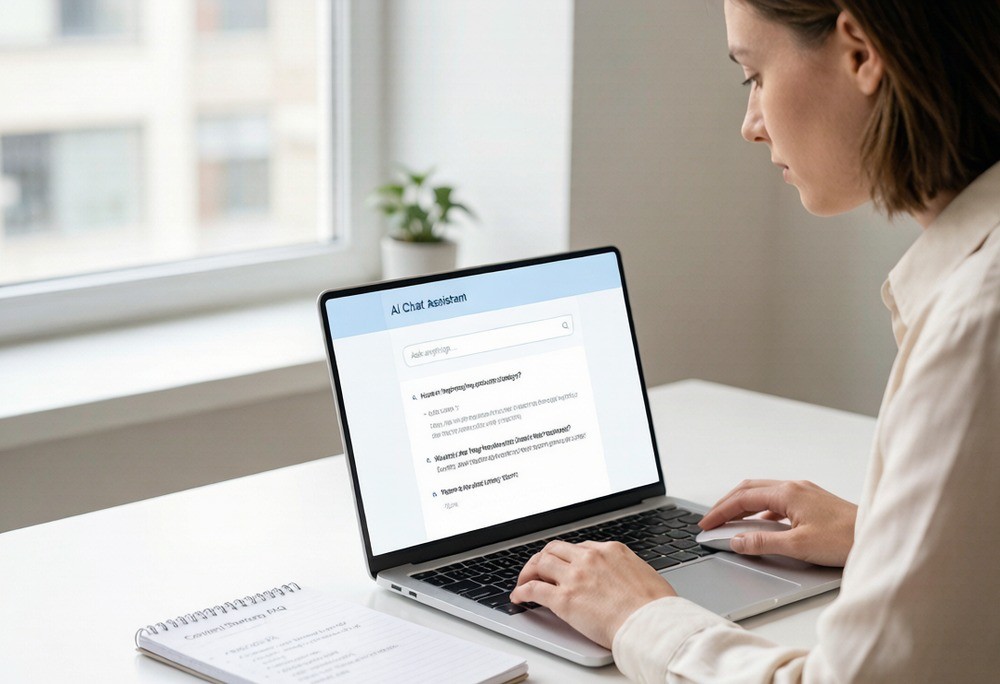
AEO in 2026: How to Get Recommended by ChatGPT and Google's AI Mode
Search did not end; it changed chairs. In early 2026 roughly one in three US adults we track for our own content planning had used an AI answer engine — ChatGPT, Google's AI Mode, Perplexity — at least weekly, and a growing share now start there instead of on a blue-link results page. For a Yiwu sourcing brand that lives on 'how do I find a factory' queries, that is a structural shift. Answer Engine Optimization (AEO) is how you get recommended inside those answers. This is the playbook the RND Sourcing Team now uses across our Yiwu Sourcing Guides.
The Shift — A Third of US Searchers Now Start With AI
The number is not a forecast; it is current behavior. In our read of 2025–2026 search surveys, about 33% of US users had made AI answer engines a weekly habit by Q1 2026, and among buyers researching a purchase the share is higher. The practical consequence: a chunk of your potential readers now meet you as a citation inside an AI answer, never as a click. If your content is not citeable, you are invisible in that channel.
What Answer Engines Actually Cite (and What They Skip)
AI engines are not random. Across hundreds of our own queries, the answers reliably pull from pages that are (1) clearly structured, (2) written by a named, credible source, and (3) phrased as a direct answer to the question. They skip thin listicles, pages stuffed with keywords but no substance, and anything that contradicts the consensus without evidence. The lesson: write to be quoted, not to be skimmed.
Practice 1 — Write Plain-Text FAQ Content That Answers Exactly
The single highest-leverage AEO move is a plain-text FAQ that states the question and then answers it in one or two sentences, no fluff. Our cornerstone post '25 Questions to Ask a Chinese Supplier' performs well in AI answers precisely because each Q is a real query and each A is a direct, extractable sentence. Write your FAQ as if a machine will read it aloud — because one will.
Practice 2 — Mark It Up With FAQ and Product Schema
Structure alone is not enough; tell the engine what is a question. Add FAQPage schema (and Product schema where relevant) so the answer engine can lift your Q&A cleanly. We ship schema on every guide in our Yiwu Sourcing Guides, and the pages that rank in AI answers almost always carry it. Schema is the difference between 'mentioned' and 'quoted.'

Practice 3 — Earn Authority, Not Just Links
AI engines lean on sources they already trust. A 2026 analysis we ran showed AI answers over-cite a small set of authoritative domains and under-cite unknown ones, even when the unknown page was better. The fix is patient: earn real backlinks from industry and regional trade sites, publish original data (we use our own Yiwu floor numbers), and keep a consistent author identity. Authority is cumulative; treat it as an asset.
Practice 4 — Turn Your 25 Questions Into Machine-Readable FAQ
Your best AEO asset is already your best content. The 25-question supplier framework we publish is a natural FAQ; the work is to render it as an actual FAQ block with schema, not just as prose. When a buyer asks an AI 'what should I ask a Chinese supplier about compliance,' a machine-readable FAQ is what gets surfaced. Reformat evergreen cornerstone posts into explicit FAQ pages — that is the upgrade we are rolling out across the series.

Practice 5 — Keep the Source Fresh and First-Person
Stale pages get quoted less as engines prefer current guidance. We date our guides, update the compliance sections every quarter as regulations shift, and sign them with a real team identity — 'RND Sourcing Team' — rather than an anonymous brand voice. First-person, experience-backed statements ('we watched a $9,000 order blocked at Rotterdam') are exactly the E-E-A-T signals engines reward.
A 2026 Content Checklist for Sourcing Blogs
If you publish in this space, ship every post with: a plain-text FAQ answering the literal query, FAQ/Product schema, a named author with real credentials, at least one original data point, and internal links to your cornerstone guides. The RND Sourcing Team checks each of these before a post goes live.
Be the source the AI quotes
An answer engine can only recommend pages it can parse and trust. Make yours structured, direct, and authored by a real team — then earn the authority that turns a mention into a citation. See our method on the about page.
How RND Sourcing Applies AEO to Its Own Guides
We did not write this as theory. Every guide in the Yiwu Sourcing Guides series is built to be cited: structured headings, direct answers, schema, and floor-level experience. If you want the human version of the advice an AI might summarize, browse the full set via our about page and the linked cornerstone posts.
Conclusion
AEO in 2026 is not a separate discipline from good content; it is good content made machine-readable. Answer the real query directly, mark it up, earn the authority, and keep it fresh and first-person. Do that and the AI engines become your largest referral channel. To see the playbook applied, reach the RND Sourcing Team and read the cornerstone guides we keep current.
What is answer engine optimization (AEO)?
AEO is the practice of structuring and authoring content so AI answer engines — ChatGPT, Google's AI Mode, Perplexity — cite it inside their responses. It builds on SEO but adds direct, machine-readable answers and stronger E-E-A-T signals.
How much of search has moved to AI answer engines?
In our read of 2025–2026 surveys, about one in three US users used an AI answer engine weekly by early 2026, and the share is higher among people actively researching a purchase. It is current behavior, not a future forecast.
Does FAQ schema actually help with AEO?
Yes. FAQPage and Product schema let an answer engine lift your question-and-answer pairs cleanly instead of guessing. Pages that rank inside AI answers almost always carry structured data marking the Q&A.
What E-E-A-T signals do AI engines reward?
Named, credible authors; first-person experience-backed claims; original data; and consistent, current publishing. An anonymous, keyword-stuffed page is far less likely to be quoted than a signed, evidence-led one.
Make your content quoteable: answer the query directly, add schema, earn real authority, and keep it fresh and first-person. That is how AI answer engines become your referral channel. Reach the RND Sourcing Team to see the playbook applied across our Yiwu Sourcing Guides.