BSCI & Sedex: Passing the Social-Compliance Audit Western Retailers Require
- Share
- Issue Time
- Oct 26,2026
Summary
Western retailers increasingly treat amfori BSCI and Sedex SMETA reports as a hard gate before any purchase order. This guide explains how the two systems differ, what the 2026 semi-announced audit regime changed, which documents, fire-safety basics and working-hour rules auditors test, what a report costs and how long it stays valid, and the zero-tolerance findings that end an audit on the spot.

Why Social-Compliance Audits Became a Hard Gate for China Suppliers
For years, social audits were something a factory did after winning a customer: a formality, a certificate on the wall. That era is over. Large European retailers — the Lidl, Aldi, H&M and Zara tier — now require a current social-compliance report before a factory can even be onboarded as a supplier, and marketplace and branded-resale programs increasingly ask for the same documentation from mid-sized sellers who never expected to be audited.
Three forces pushed the gate earlier. First, European due-diligence law: Directive (EU) 2024/1760 (CSDDD) obliges large companies to identify and remediate human-rights harms in their chain of activities, and an audited supplier is how a buyer documents that effort. Second, repeated scandal-driven enforcement — unauthorized subcontracting discovered after goods reach Europe now triggers recalls, delistings and press damage that no buyer wants to relive. Third, practical economics: one shared audit report is cheaper for everyone than twenty duplicate inspections, which is exactly what the BSCI and Sedex platforms were built to deliver.
If you manufacture in China and sell to or through European and North American retailers, assume that an amfori BSCI or SMETA report will be requested — not as courtesy, but as a condition of the first order.
BSCI and Sedex SMETA at a Glance
The two systems overlap heavily but are not interchangeable, and mixing them up wastes both money and audit windows.
amfori BSCI (Business Social Compliance Initiative, run by the Brussels-based trade association amfori) is a single Code of Conduct built around 13 Performance Areas: management system, worker involvement, freedom of association, no discrimination, fair remuneration, decent working hours, occupational health and safety, no child labour, special protection for young workers, no precarious employment, no bonded/forced labour or human trafficking, environmental protection, and ethical business behaviour. An audit does not produce a certificate — it produces a graded report with an A to E rating, shared on the amfori platform, where your buyers review it. A rating of C or better is what most retail sourcing policies accept; D often triggers a 3–6 month improvement window; E effectively pauses the relationship.
Sedex is not an audit standard at all — it is a data platform. The audit method is SMETA (Sedex Members Ethical Trade Audit), which follows the ETI Base Code and can be run as a 2-Pillar audit (Labour Standards + Health & Safety) or a 4-Pillar audit that adds Environment and Business Ethics. SMETA 7.0, the current version, emphasizes unannounced and semi-announced styles and a corrective-action plan the supplier owns. Like BSCI, a SMETA audit yields a graded report — there is no pass/fail certificate — uploaded to your Sedex account, where any buyer you authorize can read it.
The decisive practical difference: which report your customer asks for. UK and many general-merchandise buyers historically prefer SMETA; continental European retail programs historically prefer BSCI. When a factory's customers split, the work overlaps by roughly 80 percent — the same time records, payroll, fire safety and interview preparation serve both — so preparing properly once usually satisfies both systems.
| Dimension | amfori BSCI | Sedex SMETA |
|---|---|---|
| Governing body | amfori (Brussels) | Sedex (London) |
| Audit scope | Code of Conduct, 13 Performance Areas | 2-Pillar (Labour + Health & Safety) or 4-Pillar (+ Environment, + Business Ethics) |
| Result | A–E rating on the amfori platform | Graded report + corrective action plan on the Sedex platform |
| Certificate? | No — report only | No — report only |
| Typical buyer base | Continental European retail programs | UK and global general-merchandise buyers |
| Report validity in practice | A: re-audit in ~3 years; B: ~2 years; C/D: 1 year with follow-up | No official expiry; buyers commonly accept 12–24 months |
What Changed in 2026: Semi-Announced Is the New Default
The single biggest operational change inside the BSCI world is the audit mode. Fully announced audits — the factory knowing the exact date a month ahead — have been phased out. The default is now semi-announced: the factory receives a window of roughly one month and knows the auditor will arrive on some day inside it, but not which. High-risk factories can expect completely unannounced visits outright. SMETA 7.0 moved the same direction, encouraging semi-announced and unannounced styles for exactly the reason auditors always give: a fully announced audit measures a factory's ability to stage a performance, not its everyday condition.
Alongside the mode change, BSCI 2.0 raised the stakes in four specific ways:
- Labour rights carry roughly 45 percent of the weight. Working-hour compliance, social insurance, equal treatment and young-worker management are no longer "one section of the report" — they decide the grade.
- Electronic attendance records are effectively mandatory. Handwritten time sheets are treated as unreliable; auditors cross-check electronic clocking data against payroll and social-insurance filings. A factory that cannot produce coherent digital records for the last 12 months starts the audit with a credibility problem.
- Night shifts are covered, not skipped. Where a factory runs evening or night production, auditors schedule coverage of those shifts, including interviews with night workers. Fire exits, emergency lighting and first-aid capability must hold up at 3 a.m., not only at 3 p.m.
- Environmental performance is scored on its own, aligned with the direction of EU due-diligence rules — permits, waste handling and chemical storage are graded, not noted.
The strategic consequence for suppliers is simple: your everyday operating condition is now the audited condition. A factory that runs a clean operation every day passes a surprise visit; a factory that polishes itself the week before a known date does not.
The Document Room: Twelve Months of Records That Must Reconcile
Auditors spend a large share of audit time — experienced practitioners put it well over half — in the document room. The test is not whether the file is thick; it is whether the documents reconcile with each other and with reality.
The core file covers the last 12 months and includes:
- Business licence and, where applicable, factory-floor plan showing production, warehouse, dormitory and canteen areas
- Labour contracts and personnel files for every worker on site, including age-verification records at hiring
- Attendance records (electronic) showing regular hours, overtime and rest days
- Payroll records with base wage, overtime premiums, deductions and worker signatures, plus bank payment records
- Social-insurance contribution records matched against the employee roster
- Emergency-drill records with photos and sign-in sheets, fire-equipment inspection logs, first-aid training records
- Chemical inventory with MSDS sheets, PPE issuance records, occupational-health checkups where relevant
- Environmental permits, waste-disposal contracts and transfer records
- Grievance-mechanism records: the complaints channel, and evidence that complaints were handled
- Disciplinary policy, anti-discrimination and anti-harassment policy, and the supplier code of conduct the factory signed
The failure mode is never "missing paper". It is inconsistency: a payroll showing 60-hour weeks while attendance shows 45; an employee roster of 230 while social insurance covers 180; a contract signed by someone whose signature on the time sheet does not match. Auditors are trained in triangulation — document against document, document against interview, document against what they see on the floor. One honest gap is a finding; a pattern of gaps reads as fraud, and fraud escalates a report dramatically.

The Site Walk: Fire Safety and the Physical Basics
The walk-through usually starts where you would expect: fire safety. It is the highest-frequency finding category in Chinese factory audits for a mundane reason — production pressure quietly consumes escape routes. Auditors check:
- Escape corridors and stairwells completely clear of cartons, racks and WIP — not "clear when we tidy up", clear now
- At least two unlocked, outward-opening emergency exits per occupied floor, unblocked and unchained
- Emergency lighting and illuminated exit signage present and powered
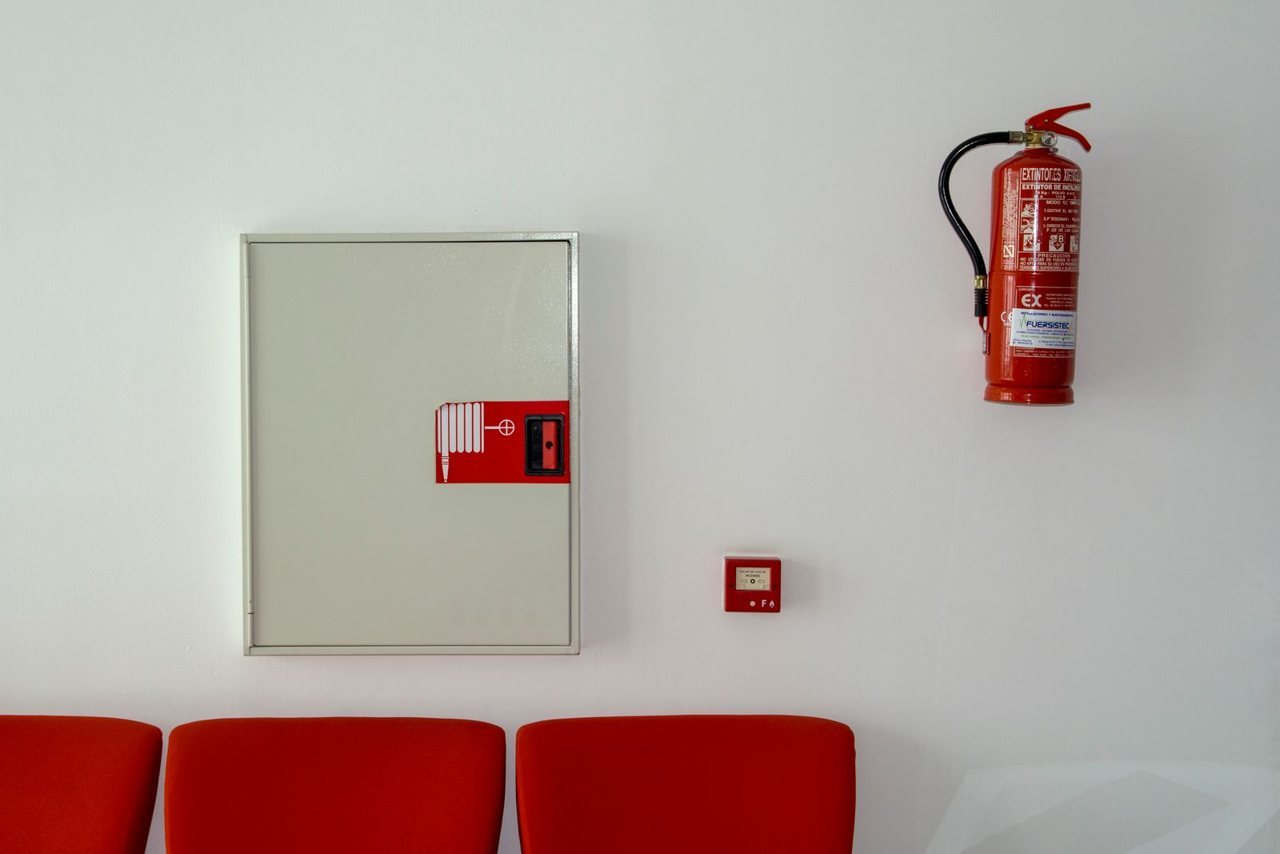
- Fire extinguishers mounted, in date, inspected monthly with records; hose reels and alarm buttons serviced
- Evacuation plans posted and matching the actual floor layout; drill records showing practice, not just a filed certificate
Buildings constructed before the March 1998 tightening of Chinese fire codes get extra scrutiny: amfori's own China guidance instructs auditors to verify construction year and record building-safety evidence — property ownership certificate, third-party structural surveys — for older buildings. If you rent an older plant, have that documentation ready before the auditor asks.
Beyond fire, the walk covers machine guarding on presses and cutters, electrical panels that actually close, chemical storage separated from heat with MSDS posted, PPE worn because it is normal rather than because a visitor arrived, and the dormitory and canteen — space per bed, ventilation, food-handling permits. None of this is expensive to fix in advance; all of it is expensive to fix after a D rating.
Working Hours and Wages: Where Most Factories Actually Fail
If fire safety is the most visible finding category, working hours are the most fatal to the grade. Chinese labour law sets the frame: eight hours per day and a 40-hour week as the standard, overtime capped at three hours per day and 36 hours per month, overtime premiums of 150 percent on ordinary days, 200 percent on rest days and 300 percent on statutory holidays, and at least one rest day per week. The BSCI Code adds its own floor on top: regular weekly hours not exceeding 48, overtime genuinely voluntary and — outside exceptional circumstances — not exceeding 12 hours per week.
Real production rarely respects 36 overtime hours in a month, which is why this is the hardest area to remediate honestly. The audit, however, does not grade your order book; it grades your system: is overtime authorized in advance and recorded, are premiums paid at the correct multiples, is the record consistent across attendance, payroll and bank transfers, and do workers confirm in interview that they understand and consent? The factories that pass are not the ones with the lightest hours — they are the ones whose pay slips, clocking data and worker answers agree with each other.
Wage compliance fails for smaller reasons: a deduction that was legal under local rules but never explained, a probation wage below the local minimum, a piece-rate structure where a slow month lands under minimum wage. Fix these in the system, not the file — auditors interview workers precisely to catch the difference.
Red Flags That End an Audit Immediately
Most findings are gradual — a rating slips from B to C over accumulated minors. Some findings are not gradual. The zero-tolerance issues that trigger immediate E-level outcomes and, in serious cases, abort the audit:
- Child labour — any worker below the legal minimum age, and gaps in age verification at hiring
- Forced, bonded or trafficked labour — withheld identity documents, recruitment-fee debt charged to workers, restricted freedom of movement
- Locked or blocked emergency exits and extinguished escape routes during working hours
- Physical abuse, corporal punishment or credible threats against workers
- Bribery of the auditor — any attempt, however small, ends the audit's credibility permanently
- Falsified records — back-dated files, two sets of books discovered mid-audit
One category deserves its own paragraph because it destroys buyers indirectly: undisclosed subcontracting. A factory that quietly sends overflow production to an unaudited neighbour converts its own clean report into a liability — the buyer's compliance question was "who makes my goods?", and the honest answer is "also the building next door, which no one has audited." If you subcontract, disclose it, and expect the subcontractor to be audited too. Many report templates and buyer codes now treat concealment as a more serious finding than the subcontracting itself.
Cost, Validity and How Results Actually Work
Budgets vary with region, headcount and audit company, but the 2026 benchmark ranges from accredited audit-service providers are stable enough to plan around:
- BSCI first audit: roughly RMB 10,000–30,000 (about USD 1,400–4,200) for a typical mid-size factory, charged per auditor man-day by amfori-approved audit companies such as SGS, Bureau Veritas, Intertek, TÜV and QIMA; unannounced styles carry a premium of roughly 30–50 percent.
- SMETA 2-Pillar: roughly RMB 15,000–30,000 for a factory of around 50 workers; the 4-Pillar version adds roughly 30–50 percent. Larger plants and multi-building sites cost more.
- Platform fees: a Sedex supplier membership (about RMB 2,650 per year at the 2026 fee level) plus a report-upload fee per audit; BSCI requires registration on the amfori platform and, historically, authorization (RSP) from a member buyer — 2026 rules add a self-application track so factories can request audits without waiting for a buyer.
Validity is where expectations most often collide with reality. There is no universal expiry date: Sedex states plainly that SMETA reports have no official expiration and validity is buyer-specific, while in practice most buyers accept reports up to roughly 12–24 months old. BSCI's grading embeds its own cadence — an A-rated factory expects re-audit in about three years, B in about two, and a C or D triggers a one-year follow-up cycle with a corrective action plan. The grade, not the calendar, decides when the next auditor arrives.
The economics favour doing it properly once: a single report lives on the platform and is shared with every authorized buyer, which is the entire commercial logic of both systems — one audit replacing twenty.
A 60-Day Preparation Plan That Survives a Surprise Visit
Because the default audit mode is now semi-announced, preparation has to be a project with a deadline, not a defensive scramble. A realistic 60-day sequence:
- Days 1–10: gap analysis. Score the factory against the 13 BSCI Performance Areas (or the SMETA 2-Pillar scope if that is what your buyer wants). Prioritize zero-tolerance exposures and the two heaviest areas — occupational health & safety and working hours.
- Days 10–25: records first. Deploy or clean up electronic attendance; rebuild payroll so base wage, overtime premiums and deductions compute correctly and match bank transfers; reconcile the social-insurance roster with the actual employee list. This is the longest lead-time item — records must be produced by the ordinary process, not reconstructed.
- Days 25–40: the floor. Clear every escape route and keep it clear; mount and log monthly inspections of extinguishers; fix emergency lighting and exit signage; guard machines; post MSDS at chemical stations; run a fire drill with photos and sign-in sheets; walk the dormitory and canteen at night.
- Days 40–50: people. Brief supervisors and workers on what the audit is and what their rights are — never a script. Auditors interview 10–30 randomly selected workers privately, one-on-one, including night shifts, and coached answers are themselves a finding. Workers should know their wage structure, their hours, and the grievance channel because those things are true.
- Days 50–60: mock audit. Have an internal team or consultant run a full dry run: documents, walk-through, interviews. Every inconsistency a mock audit finds is one the real auditor writes down instead.
- Ongoing: subcontractor register. List every site that touches your production, decide what to disclose, and start bringing serious subcontractors into the same compliance track.
The factories that pass reliably in the semi-announced era share one trait: the audit measures nothing unusual about them. Their fire lanes are clear on a Tuesday in February, their pay slips reconcile in July, and their workers can describe the grievance procedure without rehearsing it. That is what "passing BSCI and Sedex" actually means — not a performance for a auditor's visit, but an operation that would not change if one arrived tomorrow.
References
- amfori — amfori BSCI Code of Conduct and System Rules (13 Performance Areas; A–E rating and follow-up cadence): amfori.org
- amfori — MEMO AC 2021/10, Building & Fire Safety in PRC (verification of pre-1998 buildings, property certificates and third-party structural surveys under PA7): amfori.org
- Sedex — SMETA audit guidance and membership FAQ (2-Pillar/4-Pillar scope; no official report expiry; buyer-specific validity; costs set by affiliate audit companies): sedex.com
- amfori BSCI 2.0 audit-mode reforms (semi-announced as default, unannounced for high-risk sites; electronic time records; night-shift coverage; labour-rights weighting) — 2026 advisories from amfori-approved audit and certification providers
- Labour Law of the People's Republic of China and State Council regulations — standard working hours, overtime limits (3 hours/day, 36 hours/month), overtime premium rates (150%/200%/300%), minimum wage
- ETI Base Code — the labour-standards foundation referenced by SMETA: ethicaltrade.org
- Directive (EU) 2024/1760 (Corporate Sustainability Due Diligence) — the buyer-side driver for supplier human-rights due diligence: eur-lex.europa.eu