Prototype to Sample to Small Batch: De-Risking New Product Development
- Share
- publisher
- RND Sourcing Team
- Issue Time
- Aug 22,2026
Summary
A Yiwu sourcing team explains new-product-development staged validation: a prototype proves the concept, a sample (including the pre-production PP sample) proves it can be built to spec, and a small batch proves real demand — each stage resolving one uncertainty before the next dollar is spent.
Prototype to Sample to Small Batch: De-Risking New Product Development
The fastest way to lose a product budget is to skip straight from a great idea to a 5,000-unit order. At RND Sourcing we stage every new product through three gates — prototype, sample, small batch — and each gate exists to kill exactly one uncertainty. This is not the same as a sampling service (for that, see our Product Sampling blog); this is about sequencing your risk so the expensive bet is the last one you make, not the first.
Why Stage Your Validation Instead of Betting Everything
A single 5,000-unit production run conflates three completely different questions: does the idea work, can a factory build it to spec, and will customers actually buy it? If you answer all three at once, a failure in any one wastes the whole order. Staging separates the questions so each is answered at the cheapest possible cost. You fail small and often, then succeed once, at scale.
Spend the smallest dollar on the biggest unknown
The rule we enforce: resolve the largest remaining uncertainty with the cheapest possible test. Never let the factory's MOQ dictate when you validate. Our inspection team sits at the sample and small-batch gates to keep them honest.
The Core Principle: Each Stage Kills One Uncertainty
Prototype, sample, and small batch are not three ways to get 'a thing.' They are three experiments with three different hypotheses. Confuse them and you either over-spend early or under-test late. The discipline is to name, before each stage, the single question it must answer — and to refuse to advance until it is answered.
Prototype
Hypothesis: the concept works in principle. Kill uncertainty about function and form.
Sample
Hypothesis: a factory can build it to spec, repeatedly. Kill uncertainty about manufacturability.
Small batch
Hypothesis: real customers buy it at the target price. Kill uncertainty about demand.
Stage 1 — Prototype: Prove the Concept, Not the Product
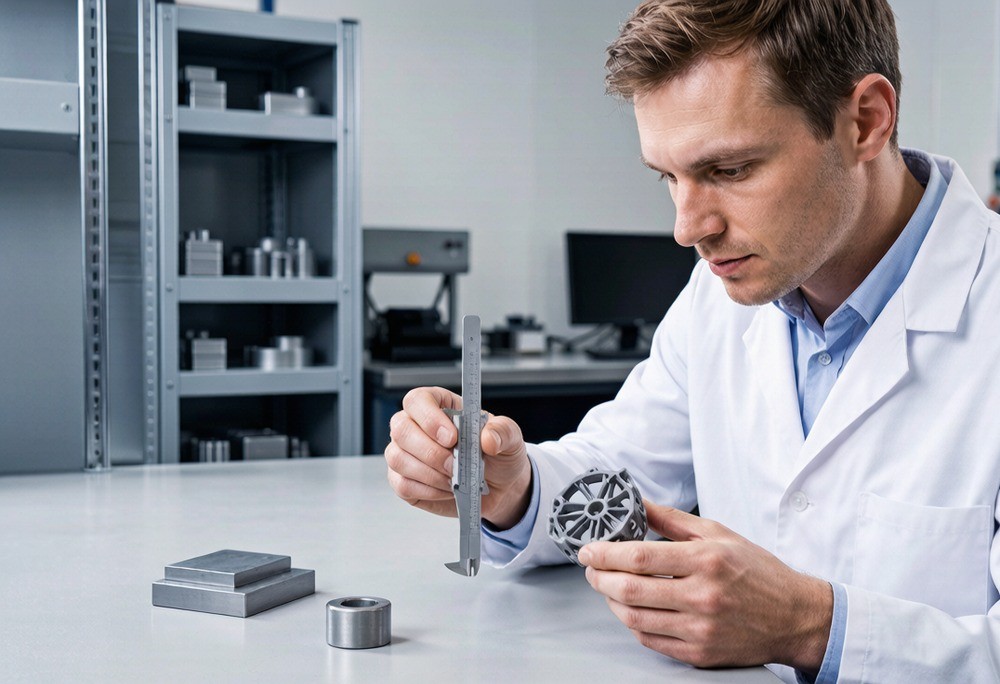
A prototype is the cheapest artifact that makes the idea real enough to learn from. It is usually 3D-printed, hand-made, or cobbled from off-the-shelf parts. Its only job is to answer 'does this work and feel right?' It deliberately ignores cosmetics, final materials, and mass-production feasibility — those are later stages' problems.
What a Prototype Costs (and What It Skips)
Prototypes run from $50 for a simple 3D print to $2,000 for a functional electronics breadboard, occasionally more for complex mechanisms. What it skips matters as much as what it shows: it will not tell you the final unit cost, whether the factory can hit your tolerance, or whether the surface finish survives shipping. Treating a prototype as production-ready is the classic early over-spend.
- Use the prototype to validate function, ergonomics, and the 'wow' factor.
- Do NOT use it to judge final material cost or cosmetic finish.
- Expect to iterate 2-4 times before the concept is locked.
- Keep the prototype out of any customer-facing promise until sampled.
Stage 2 — Sample: Prove It Can Be Built to Spec
The sample is the factory's answer to your spec sheet: same materials, same process, same finish. If the prototype proved the idea, the sample proves the idea is manufacturable at the quality you intend to ship. This is where most first-time importers get burned — a 'sample' that is hand-finished by the engineer is not the same as a sample from the actual production line.
The Pre-Production (PP) Sample Acceptance Standard
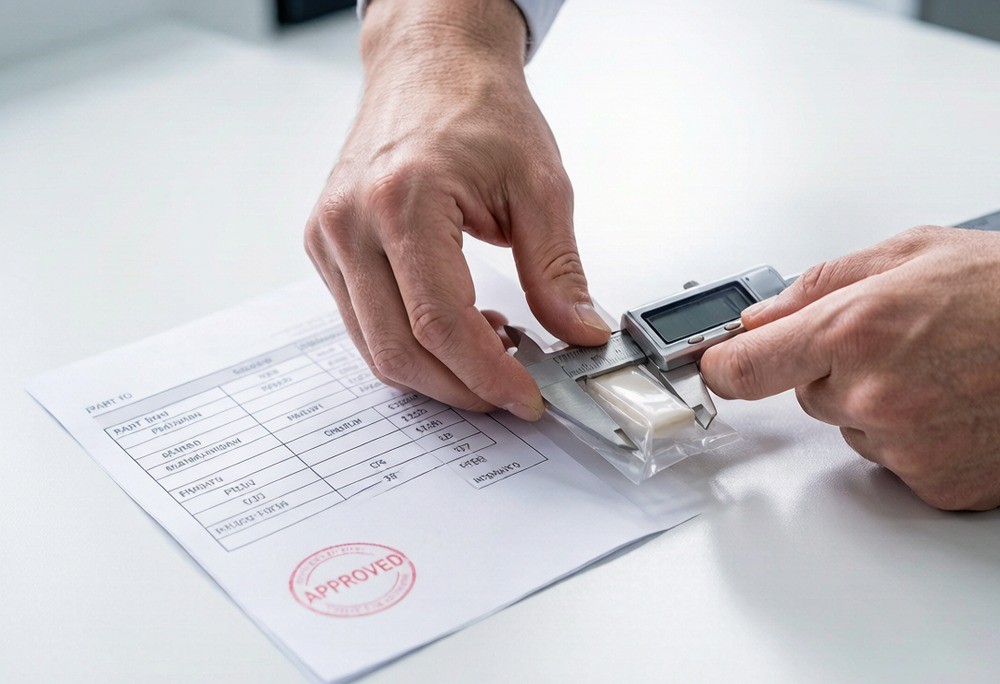
The most important sample is the pre-production (PP) sample — made on the actual production line, with final tooling, before the full run. Once it passes, it is sealed as the reference the entire order must match. Our acceptance standard, applied at our inspection gate, is non-negotiable:
| Check | Acceptance standard |
|---|---|
| Dimensions | Within stated tolerance (e.g. ±0.5mm) on all critical points |
| Materials | Grade matches spec sheet; cert provided |
| Function | Passes the documented function test 100% |
| Appearance | No scratches, sink marks, or color shift vs Pantone |
| Packaging | Carton, barcode, and insert exactly as approved |
| Safety | Compliance test passed if category requires it |
Seal the PP sample or regret it
Without a sealed PP sample, 'close enough' becomes the production standard. We photograph, measure, and archive the approved PP sample so every shipment is judged against the same artifact, not against memory.
Stage 3 — Small Batch: Prove the Market, Not Just the Factory
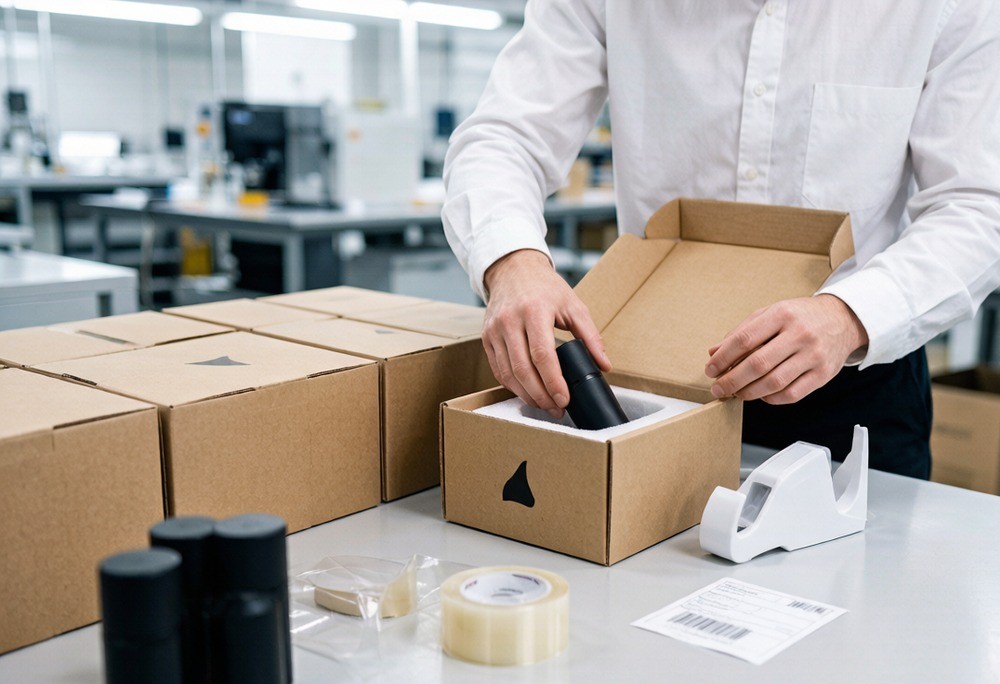
Even a perfect sample only proves you can make it — not that anyone will buy 5,000. The small batch (typically 200-1,000 units) is your real-world demand test. It forces the product through actual listing, fulfillment, and customer use, exposing problems no factory can reveal: weak photos, confusing instructions, a price nobody accepts, a return reason you never anticipated.
Test-Market Metrics That Actually Matter
A small batch is only as useful as the metrics you watch. Vanity signals like 'we got some orders' hide the truth. Track the numbers that predict whether a full run is safe.
- Conversion rate from listing view to order — your true demand signal.
- Return rate and the stated reason — the mirror of your PP standard.
- Review sentiment and 1-star themes — free post-launch research.
- Repeat-purchase or reorder intent — the moat test in the wild.
- Fulfillment cost vs plan — the hidden margin leak.
Prototype vs Sample vs Small Batch: Side by Side
If you remember one table from this post, make it this one. It is the contract between you and your budget.
| Stage | Quantity | Proves | Does NOT prove |
|---|---|---|---|
| Prototype | 1-5 pcs | Concept works & feels right | Cost, cosmetic finish, scalability |
| Sample (incl PP) | 5-30 pcs | Factory can hit spec | That customers will buy it |
| Small batch | 200-1,000 pcs | Real demand & fulfillment | Long-run margin at 5,000+ units |
How RND Sequences the Three Stages
When a client develops with us, we refuse to quote a 5,000-unit run until the prototype is locked, the PP sample is sealed and inspected, and a small batch has returned clean demand signals. That sequencing is why our clients' launch failure rate is a fraction of the industry norm. The factory wants your full order now; your budget wants proof first. We are the buffer between those two pressures.
Conclusion: De-Risk in Order, or Over-Pay in a Lump
New product development is a sequence of uncertainties, not a single leap. Let the prototype prove the concept, the sample (and its sealed PP reference) prove the spec, and the small batch prove the market — each stage resolving exactly one question before the next dollar moves. Do it in order and you fail cheaply and rarely; skip it and you bet everything on a guess. For a staged, inspected path from prototype to small batch, contact RND Sourcing and we will sequence your risk so the big order is your safest one.
What is the difference between a prototype, a sample, and a small batch?
A prototype (1-5 pcs) proves the concept works and feels right. A sample, especially the pre-production PP sample, proves a factory can build it to spec on the real line. A small batch (200-1,000 pcs) proves real customers will buy and that fulfillment holds up.
What is a pre-production (PP) sample and why seal it?
A PP sample is made on the actual production line with final tooling before the full run. Once it passes your acceptance standard, it is sealed and archived as the reference every shipment must match — preventing 'close enough' from becoming the production standard.
How many units should a de-risking small batch be?
Typically 200-1,000 units — enough to generate a real conversion rate, return reasons, and review sentiment, but small enough to limit downside if demand fails. The point is to learn, not to profit, at this gate.
Is this the same as a product sampling service?
No. Sampling is the service of obtaining factory samples; staged validation is the risk sequence around it. For the sampling process itself, see our Product Sampling blog, but the prototype-to-small-batch gates here are about de-risking the whole launch.
Stage your risk: prototype proves the idea, sample proves the spec, small batch proves the market. Advance only when each gate is passed. Work with RND Sourcing to sequence your product development so the full production order is your safest decision, not your first.