Reshoring & Nearshoring 2026: Vietnam, Mexico, India vs China Sourcing Map
- Share
- Issue Time
- Nov 15,2026
Summary
A 2026 country-by-country sourcing map for US importers: how Vietnam, Mexico, and India compare to China on tariffs, capacity, logistics, and rules of origin, plus a hybrid SKU-split framework and an action checklist for re-sourcing without triggering transshipment penalties.

Every two years the sourcing question was "who is cheapest." In 2026 the question is "who is cheapest after tariffs, rules of origin, and logistics are counted." The legal ground shifted under everyone's feet: on 20 February 2026 the US Supreme Court held 6-3 that the International Emergency Economic Powers Act does not authorize the President to impose broad tariffs, voiding the reciprocal and fentanyl tariffs built on it. What replaced them is a moving target of Section 122, new Section 301 actions, and a USMCA review. This is a practical sourcing map for US importers deciding where each SKU should actually be made.
The 2026 Tariff Reset: Why Supply Chains Are Being Redrawn
The February 2026 Supreme Court ruling did not end US tariffs on China - it ended the legal hook used for the blanket "reciprocal" and fentanyl tariffs. US Customs and Border Protection stopped collecting those duties on 24 February 2026 and opened a refund portal (CAPE) for importers, with reported exposure around $166 billion. Within a day the Administration invoked Section 122 of the Trade Act of 1974, a 10% global tariff capped at 150 days and set to lapse on 24 July 2026 unless Congress extends it.
That left a gap that Washington is filling with the tool it always had: Section 301. On 11 March 2026 the USTR opened Section 301 investigations into Vietnam and 15 other economies over excess industrial capacity, and on 2 June 2026 proposed additional 10-12.5% Section 301 tariffs across roughly 60 economies. The China-specific Section 301 schedules (Lists 1-4, at +25% and +7.5%) remain in force, as do the Section 232 metals tariffs (50% steel, 25% aluminium) applied to all countries. The practical result: a layered, frequently changing duty stack that every re-sourcing decision must be modeled against.
Read the Real 2026 Duty Stack Before You Move Anything
The headline "tariff rate" is almost never the number that lands on your P&L. For a US-bound SKU the effective rate is the sum of MFN duty + any Section 301 + any Section 232 + the current global/forced-labor surcharge, minus any preferential rate you can document. Approximate mid-2026 posture:
| Origin | Mechanism | Illustrative effective rate | US FTA? |
|---|---|---|---|
| China | MFN + Section 301 (Lists 1-4, +25%/+7.5%) + new 12.5% forced-labor 301 tier | ~35-45%+ | No |
| Vietnam | MFN + 12.5% forced-labor 301 tier (no China-specific 301) | ~10-20% | No |
| Mexico (USMCA-qualifying) | 0% - carved out of the global surcharge | 0% (Section 232 metals still apply) | Yes - USMCA |
| Mexico (non-qualifying) | MFN + 10% global surcharge | MFN + 10% | Partial |
| India | MFN + 12.5% forced-labor 301 tier | ~12.5% + MFN | No |
Rates are illustrative of the structure and were in flux through 2026; a licensed customs broker must price your exact HTS code. The point of the table is the pattern: Mexico can be zero, Vietnam and India sit in a mid-tier, and China carries the heaviest load - but only on the SKUs where those tariffs actually bite.
Vietnam: The Default "China+1" - Strong but Capacity-Constrained
Vietnam is the default diversification destination for good reasons. US imports from Vietnam reached $136.6 billion in 2024 (up 19% year over year), and it is genuinely strong in apparel (knit and woven), footwear (Nike, Adidas, Puma all source heavily there), wooden furniture, and electronics assembly (Samsung, LG, Intel). For labor-intensive, tariff-sensitive goods, Vietnam is often the right first move.
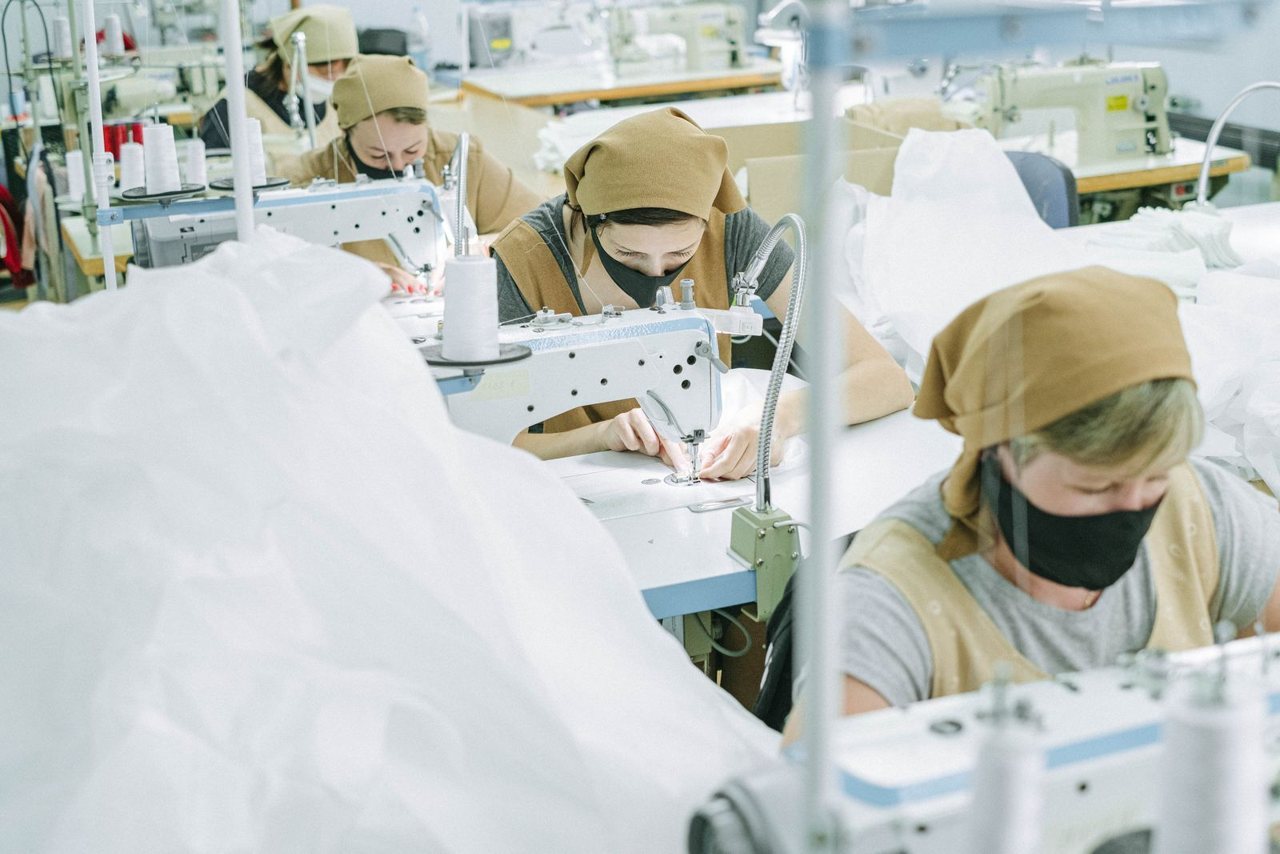
But the constraints are now real. Vietnamese ports at Da Nang and Ho Chi Minh City are running at 85-90% capacity; new-order lead times have stretched from 40-50 days in 2022 to 60-75 days. Wage inflation in the industrial belt runs 8-12% a year, skilled labor is scarce, and fast-scaling suppliers show defect rates of 2-4% versus 0.5-1.5% at established Chinese factories. Critically, the upstream supply chain remains dependent on imported components - Vietnam assembles, but much of the value is still added elsewhere.
The single biggest 2026 risk in Vietnam is transshipment. Chinese goods lightly processed or relabeled in Vietnam remain Chinese-origin and remain subject to Section 301. CBP now uses supply-chain mapping, HS pattern analysis, and isotopic/chemical testing; a transshipment finding adds a non-mitigable 40% penalty on top of the country-of-origin rate. Vietnam itself tightened the rules - certificate-of-origin authority moved from VCCI to the Ministry of Industry and Trade in May 2025 with stricter substantial-transformation standards. Document genuine local value, or the savings evaporate in an audit.
Mexico: USMCA 0% - But Only With Genuine Transformation
Mexico is the nearshoring winner on paper and increasingly in fact: it became the United States' largest trading partner in 2024, with over $872 billion in total goods trade in 2025. The prize is USMCA - goods that qualify enter at 0% and are carved out of the global surcharge. For apparel, the yarn-forward rule alone can take a cotton T-shirt from ~54% (China) to 0%. For autos, regional value content must hit 75% (net cost), with 70% North American steel and aluminium.

The catch is discipline. Goods manufactured in China and run through a Mexican warehouse without sufficient transformation are treated as Chinese-origin and pay full China tariffs. Non-qualifying Mexican goods pay MFN plus the global surcharge, and Section 232 metals duties apply regardless. Operationally, the IMMEX program gives duty-free temporary import and VAT deferral, but you need VAT certification (A/AA/AAA) or you pay 16% up front. And the environment is not frictionless: northern border industrial vacancy sits near 2.7%, security and cargo-theft costs are real, the tax authority SAT is running retroactive audits, and the mandatory USMCA six-year review opened on 1 July 2026 - with proposals to tighten auto RVC toward 80-85% and add US-content minimums. Mexico rewards preparation, not optimism.
India: The Long-Term Bet Still Hampered by Logistics
India is the strategic hedge everyone cites and few have fully operationalized. Its Production-Linked Incentive (PLI) schemes span 14 sectors with a combined outlay near Rs 1.97 lakh crore, and smartphone exports crossed $15 billion in FY2025 versus under $500 million in FY2020. For pharmaceuticals, auto components, and solar modules, India is building real depth.
But two structural gaps cap the near-term opportunity. First, domestic value addition in electronics is still only about 15-20% - better than before, but well short of a mature hub, because sub-assemblies and core components are still imported (largely from China). Second, logistics cost runs 13-14% of GDP versus about 8% in China and 6-8% in OECD economies; port turnaround, multimodal freight, and Red Sea/Suez war-risk premiums of 2-3% on Europe-bound containers can erase the PLI margin entirely. India is a medium-to-long-term option, not an immediate substitute for China on most categories.
China: Keep It for What It Does Best
Diversification does not mean abandonment. The same tariff math that pushes apparel and footwear out of China leaves whole categories where China is irreplaceable: chemicals and pharmaceuticals (still ~68% China-sourced), industrial machinery (~72%), and precision optics (~81%). These are capital-intensive, regulation-heavy, and expertise-dependent - exactly where China's four-decade-deep supplier ecosystem, engineering talent, and scale win, and where the tariff disadvantage is absorbed rather than avoided.
The mature strategy is not "leave China" but "rebalance China." Keep complex, IP-sensitive, and capability-dependent production where the ecosystem exists, and move only the tariff-exposed, labor-intensive volume elsewhere. A 2025-2026 dip in US-China tension already sent some orders back to Chinese factories because the total cost re-tipped in China's favor - proof that this is a per-SKU calculation, not a flag you plant.
The Hybrid Model: Splitting Tariff-Exposed and Complexity SKUs
The decision rule that survives 2026 volatility is a split, not a switch:
- Move tariff-exposed, labor-intensive SKUs - apparel, footwear, wooden furniture, basic electronics assembly - to Vietnam or, where speed and USMCA apply, Mexico.
- Keep complex, capital-intensive, regulated, or IP-sensitive production in China, where the ecosystem and quality matlab justify the duty.
- Dual-source any SKU whose tariff exposure or single-factory risk would hurt if one lane closed.
- Consolidate at a Shenzhen or Yiwu hub for mixed-origin shipments, and keep one backup lane for each critical item.
This is the "China+1" that actually works: not replacing China, but sandbagging the specific SKUs the tariff stack punishes while protecting the ones where China is still the lowest total cost.
Rules of Origin Is the Make-or-Break Discipline
Every dollar of savings above depends on one thing you can document: that the goods genuinely originate where you claim. The test differs by lane.
For Vietnam and India (no US FTA): origin follows the substantial transformation test - the product must emerge with a new name, character, or use. It is qualitative, decided by a CBP officer or binding ruling, not by a local-content percentage. Cutting and sewing fabric into a garment qualifies; screwing Chinese components into a case usually does not. Mere assembly, repackaging, or relabeling is not transformation.
For Mexico (USMCA): origin follows a tariff-shift and regional-value-content rule, with documentary proof down to the raw material. A claim that fails leaves the goods as Chinese-origin. Both lanes now carry serious penalties - up to 300% of goods value in Mexican SAT actions, and under US 19 USC 1592 a negligent misdescription draws double duty/20%, a grossly negligent one quadruple/40%, and fraud the domestic value plus forfeiture, plus potential criminal exposure under 18 USC.
Build the file before you ship: bill of materials showing local inputs and labor, production records from the factory, a proper certificate of origin, and verification footage of actual production. In a 2026 audit environment, the documentation is the savings.
Country-by-Country Decision Matrix
| If your category is... | Best first origin | Watch out for |
|---|---|---|
| Apparel, footwear, wooden furniture | Vietnam (or Mexico under yarn-forward) | Port capacity, wage inflation, transshipment audits |
| Auto parts, appliances, near-market electronics | Mexico (USMCA-qualifying) | RVC proof, border congestion, security, SAT audits |
| Pharmaceuticals, solar, auto components | India (long-term) | Logistics cost, component import dependency |
| Chemicals, industrial machinery, precision optics | China | Section 301/232 load - but often absorbed |
| Mixed, tariff-exposed volume | Hybrid: Vietnam/Mexico + China backup | Rules-of-origin documentation on every lane |
Action Checklist Before You Re-Source
- Model the true 2026 duty stack per HTS code with a licensed customs broker - not your freight forwarder.
- For each SKU, decide: move, keep, or dual-source, based on tariff exposure vs capability.
- Build a rules-of-origin evidence file (BOM, production records, CoO, verification footage) before first shipment.
- Capacity-verify the target factory: BSCI/Sedex audit, third-party pre-shipment inspection, real production footage.
- Confirm Vietnam/India suppliers are not transshipment fronts - genuine local transformation only.
- Lock USMCA qualification in writing (tariff shift + RVC) before promising 0% to your finance team.
References
- US Supreme Court, opinion of 20 February 2026 (IEEPA does not authorize broad presidential tariffs); CBP ceased collection 24 Feb 2026, CAPE refund portal opened ~April 2026.
- Section 122 of the Trade Act of 1974 - 10% global tariff, 150-day limit, lapsing 24 July 2026 (Tianjin Commerce Bureau trade-friction bulletin, 2026).
- USTR Section 301 investigations initiated 11 March 2026 (Vietnam + 15 economies, excess capacity); proposed 10%/12.5% additional 301 tariffs across ~60 economies, 2 June 2026 (CCPIT Zhejiang).
- USMCA (in force 1 July 2020), GN 11 HTSUS; RVC 50% net cost / 60% transaction value (non-auto), 75% auto; yarn-forward for apparel (landedfees.com / calcmytariff.com 2026 guides).
- Vietnam: US imports $136.6B in 2024 (+19% YoY); port capacity 85-90%, lead times 60-75 days, transshipment 40% penalty, CoO authority moved to MoIT May 2025 (newbuyingagent.com, cosmosourcing.com, vietnam-directsourcing.com).
- Mexico: top US trading partner 2024; $872.8B total goods trade 2025; IMMEX/VAT certification; USMCA six-year review opened 1 July 2026 (ajot.com, latinsight.org, napsintl.com).
- India: PLI 14 sectors, Rs 1.97 lakh crore outlay; smartphone exports $15B FY2025; logistics ~13-14% of GDP (econolens.co.in, impriinsights.in, supplychainreview.org).
- Substantial transformation test, 19 CFR 134; penalty tiers 19 USC 1592 (cosmosourcing.com, calcmytariff.com).