Tariff Engineering: Legally Lowering Your China Duty (Without Crossing the Line)
- Share
- Issue Time
- Nov 4,2026
Summary
Tariff engineering is the lawful practice of designing a product or supply chain so it qualifies for a lower HTSUS duty rate. This guide walks through the century of U.S. case law that made it legal, the GRI 2(a) and substantial-transformation mechanics that move the rate, and the bright line drawn by 19 USC 1592 that separates genuine engineering from illegal misclassification.

Most importers treat the duty on a China shipment as a fixed cost, a number the freight forwarder quotes and they accept. Under U.S. customs law that number is not fixed at all. The Harmonized Tariff Schedule assigns very different rates to products that look almost identical, and a century of case law says you are allowed to design your product and your supply chain so it lands in the lower-rate box. That practice has a name: tariff engineering. It is legal, it is settled, and the difference between it and a federal penalty comes down to one question, asked about the goods exactly as they cross the border.
What Tariff Engineering Actually Means
Tariff engineering is the practice of designing, configuring, or sourcing a product so that it qualifies for a lower rate of duty under the Harmonized Tariff Schedule of the United States (HTSUS). It is not a loophole and it is not evasion. It is the lawful structuring of a transaction to minimize a tax obligation, exactly the way a business structures itself for income tax. The Supreme Court put the principle into plain words more than a century ago: an importer may shape merchandise to bring it within a lower duty class, provided the article as imported is genuinely the article it is represented to be.
Why this matters for China sourcing is simple arithmetic. The HTSUS rates on functionally similar goods can differ by 20 percentage points or more: rubber-soled athletic footwear can be dutied at 20 to 37.5 percent, while textile-soled footwear sits near 12.5 percent; a finished passenger vehicle is 2.5 percent, a cargo vehicle 25 percent. Every one of those boundaries is a place where an honest design or sourcing decision changes what you owe.
The Doctrine: A Century of Case Law
The right to engineer is not a modern improvisation. In Merritt v. Welsh (104 U.S. 694, 1881), the Court held that an importer may alter a product to minimize the tariff so long as the change is disclosed honestly. In United States v. Citroen (223 U.S. 407, 1912), the Court classified pearls by their condition as imported, drilling and stringing aside, and stated that goods are classified by examining the imported article itself, in the condition in which it is imported. The takeaway both cases share: the legality turns on what the goods truly are at the moment of entry, not on what anyone later turns them into.
The line the other way is drawn just as firmly. In Heartland By-Products (264 F.3d 1126, Federal Circuit 2001), an importer added molasses to raw sugar before import to capture a lower rate and dodge a quota. The court treated the addition as an artifice, a condition that would never occur in normal manufacturing except to game the classification. The lesson is the whole game: genuine configuration is lawful, a temporary disguise is not.
How Classification Moves the Needle: Components vs Finished Goods
The single most useful interpretive rule for an importer is General Rule of Interpretation 2(a). It says a heading that names an article also covers that article incomplete or unfinished, provided it has the essential character of the finished article, and it covers the article entered unassembled or disassembled. A flat-pack bookshelf shipped with its panels, hardware, and instructions is furniture, not a pile of wood planks, because taken together the kit has the essential character of the finished article.
That same rule is where engineering turns into evasion if you are careless. Splitting what is essentially a complete product into separate "component" entries to capture a lower rate is precisely the abuse CBP watches for. The test is essential character, and CBP applies it to the goods as presented, not to the invoice you wish you had filed. By contrast, genuinely importing components for real domestic assembly is a legitimate strategy: Mercedes-Benz, for example, ships Sprinter vans as semi-knocked-down kits (chassis and bodies under headings 8706 and 8707 at about 4 percent) and assembles them in South Carolina, adding U.S. labor and value rather than importing finished trucks at 25 percent.
Substantial Transformation: When a Second Country Changes the Rate
Where a product is made determines its duty rate and whether a free-trade rate applies at all, which is why substantial transformation is the second pillar of tariff engineering. Codified in 19 CFR Part 102 and built up through CBP rulings and Court of International Trade decisions, the test asks whether processing in a third country creates a new and different article of commerce with a name, character, or use distinct from the imported components. The classic formulation is the "new name, character, or use" test.
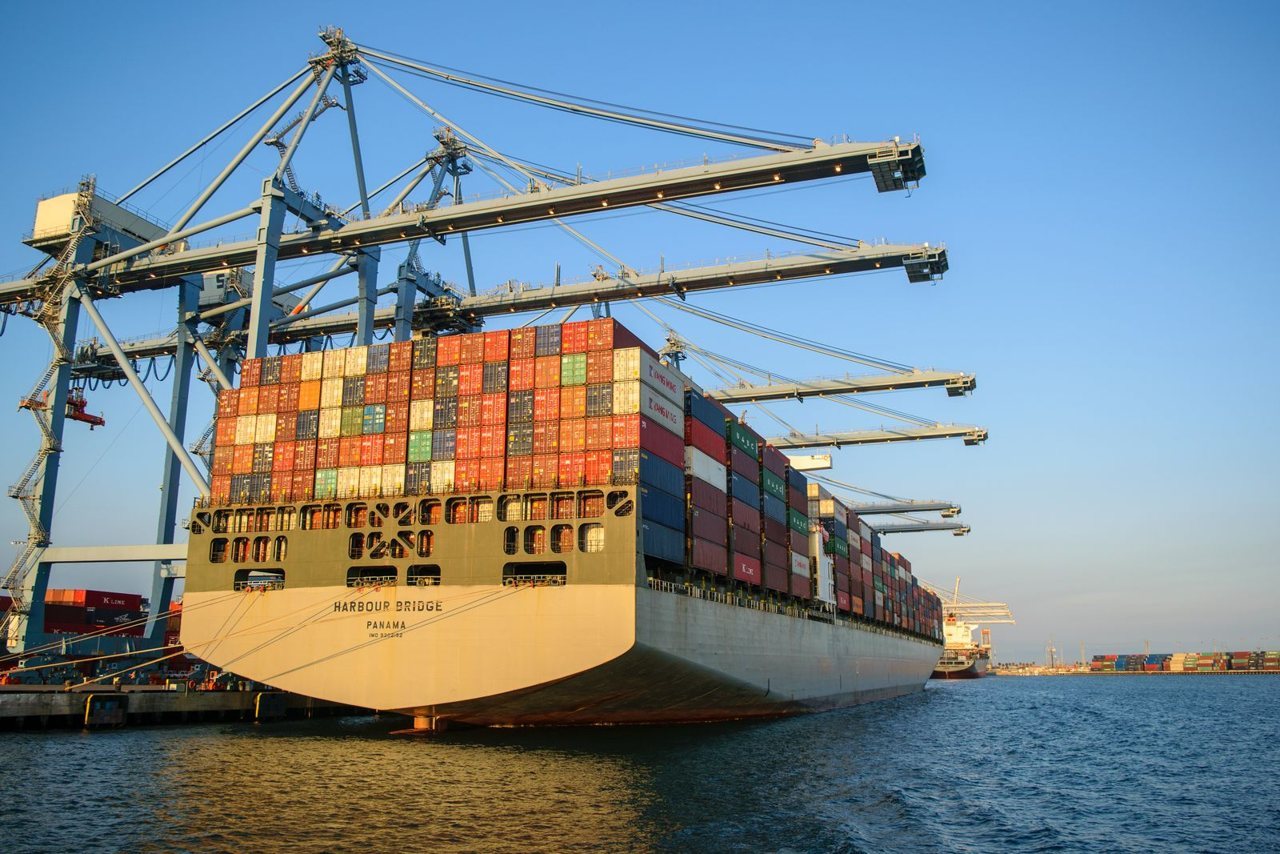
Mere assembly is rarely enough on its own. CBP weighs the complexity of the operation, the value added, the skill of the workforce, and whether the tariff classification actually changed. A container arriving at a U.S. port is where this is tested in practice: CBP can physically examine the goods and pull samples, and if the declared classification does not match the physical product, the savings evaporate and the exposure begins. This is also the discipline that separates genuine near-shoring from illegal transshipment, a distinction we take up in a later guide.
Preferential Programs: USMCA and the Rules-of-Origin Discipline
Tariff engineering is not only about the base HTSUS rate. Preferential programs can take the rate to zero, but only with genuine qualification. Under USMCA, qualifying vehicles and parts enter the United States at 0 percent, but that rate depends on real regional value content (roughly 35 to 45 percent, by build-up or build-down) and the required tariff-shift. That is why Toyota builds the Tacoma in Mexico and the Tundra in Texas, and why Mercedes assembles Sprinters domestically: the free rate is earned by real North American content, not by paperwork.
A second, fully separate lever is duty drawback, which lets an importer recover up to 99 percent of duties paid on goods that are later exported or destroyed. Drawback is not engineering in the classification sense, but it belongs in the same toolkit: a lawful recovery of duty that a careful importer captures and a careless one leaves on the table.
The Real-World Playbook: Converse, Columbia, Apple and Ford
The doctrine is easier to feel in the cases that tested it. A handful of rulings show both how far genuine engineering reaches and where it breaks.
| Case / ruling | What changed | Rate effect | Outcome |
|---|---|---|---|
| Converse felt-sole (HQ 965751) | A thin felt layer covered more than half the outsole, reclassifying the shoe | Athletic footwear 6404 (20 to 37.5%) to textile-soled 6405.20 (~12.5%) | Genuine, permanent feature; Court of International Trade ruled for Converse |
| Columbia "nurse's pocket" (NY L82690) | A small pocket below the waistline on women's blouses | Blouses 6206.30 (26.9%) to other shirts (~16%) | Functional feature; CBP accepted the reclassification |
| Apple Watch | Argued the device's essential character is a computer, not a timepiece | Wristwatch 9102 (up to 6.4%) to ADP machine 8471/8543 (0% under ITA) | Reclassified on GRI 3(b) essential character |
| Ford Transit Connect (Chicken Tax) | Imported as a passenger wagon, stripped to a cargo van after entry | Passenger 8703 (2.5%) vs cargo 8704 (25%) | Sham modification reversed after import; court ruled against Ford |
The pattern is consistent. Converse, Columbia, and Apple changed the product in a way that survived at the border and on the shelf: the felt, the pocket, and the computing function were real and permanent. Ford added passenger features only to remove them in Ohio, and the courts saw the reversal as the tell. The modification must be genuine and lasting; a feature you unbolt on arrival is evidence against you.
The Bright Line: Engineering vs Evasion
The difference between a cost-saving strategy and a federal penalty is accuracy and good faith, and Congress wrote the penalty framework in 19 U.S.C. 1592. The statute is explicit that a purpose to reduce duty alone does not make an entry fraudulent; what it penalizes is a material false statement, omission, or act.
| Legal tariff engineering | Illegal evasion | |
|---|---|---|
| Method | Change the product or the sourcing structure | Falsify the paperwork |
| Examples | Design to fit a lower HTS heading; genuine transformation in a second country; request a binding ruling | Undervalue the goods; transship through a third country with no real transformation; false country-of-origin marking |
| Goods as imported | Are what is declared | Are not what is declared |
| Consequence | Lawful duty savings | 19 USC 1592 penalties |
The penalty tiers scale with culpability. Fraud can reach the full domestic value of the merchandise. Gross negligence reaches four times the unpaid duties (or 40 percent of dutiable value where no duty was affected). Negligence reaches two times the unpaid duties (or 20 percent). The statute also gives a prior-disclosure safe harbor: if you find an error and voluntarily tell CBP before a formal investigation starts, the penalties collapse to interest on the unpaid duties for negligence or gross negligence, and to 100 percent of those duties for fraud. And CBP can look back five years under 19 U.S.C. 1621, so a classification that seemed clever in 2021 can still be reopened in 2026.

Use a Licensed Customs Broker, Not Just Your Freight Forwarder
Under 19 U.S.C. 1484, the Importer of Record owes CBP a duty of "reasonable care" to declare the correct value, classification, and duty rate on every entry. "My forwarder handled it" is not a defense, and CBP says so plainly. The freight forwarder moves the cargo; they are not your classification authority, and they are not the party on the hook.
A licensed customs broker or a trade attorney who specializes in classification is the person who reads the heading terms, the section and chapter notes, and the prior rulings, and who files the binding ruling request and stands up the audit defense. For high-volume importers, CBP's Focused Assessment audits examine classification, valuation, origin, marking, and recordkeeping directly, and documented internal procedures are what end those audits early and favorably.
Document the Rationale for Every Classification Choice
Engineering is defensible only if it is documented. For each product, keep a classification memo that states the HTS code, the GRI and the specific section or chapter note it rests on, the prior rulings you relied on, any binding ruling number, and the engineering specifications that support the choice. Before implementing a strategy, request a binding advance ruling from CBP's National Commodity Specialist Division through the CROSS (Customs Rulings Online Search System) portal; CBP aims to issue rulings within 30 days and typically 90 to 120 days for complex classifications, and a ruling is strong evidence of reasonable care if the entry is later questioned.
Hold the supporting records for five years under 19 U.S.C. 1508 and 1509. The practical rule is short: if the modification is genuine and permanent and the paperwork is honest and complete, you are engineering; if you changed only the description, you are misclassifying. The courts have drawn that line the same way for a hundred years, and so does CBP.
References
- Merritt v. Welsh, 104 U.S. 694 (1881): importer may alter a product to minimize tariff if the change is disclosed honestly.
- United States v. Citroen, 223 U.S. 407 (1912): classification by the condition of the imported article; lawful to shape goods into a lower duty class if genuinely represented.
- Heartland By-Products v. United States, 264 F.3d 1126 (Federal Circuit, 2001): adding molasses to raw sugar to capture a lower rate treated as an artifice, not engineering.
- 19 U.S.C. 1484 (reasonable care), 19 U.S.C. 1514 (protest within 180 days of liquidation), 19 U.S.C. 1592 (penalties for fraud, gross negligence, negligence), 19 U.S.C. 1621 (five-year recordkeeping and lookback).
- 19 CFR Part 102: substantial transformation and rules of origin (the "new name, character, or use" test).
- Harmonized Tariff Schedule of the United States (HTSUS), General Rules of Interpretation 2(a) and 3(b): hts.usitc.gov.
- CBP binding rulings via CROSS (Customs Rulings Online Search System) and the National Commodity Specialist Division; rulings HQ 965751 (Converse) and NY L82690 (Columbia).
- U.S. Court of International Trade; Ford Transit Connect / "Chicken Tax" litigation (CIT and Federal Circuit; Supreme Court denied certiorari in 2020).
- U.S. International Trade Administration, trade.gov: "Determining Origin: Substantial Transformation" rules-of-origin guidance.
- United States-Mexico-Canada Agreement (USMCA) rules of origin, Part 102.20 tariff-shift and regional value-content requirements.