The De Minimis Endgame: Restructuring Your China Fulfillment for 2026
- Share
- Issue Time
- Oct 14,2026
Summary
The US $800 de minimis lane is closed and the EU 150 euro exemption ended July 2026. This playbook compares three fulfillment models — bulk 3PL/FBA, bonded/FTZ deferral, and genuine regional staging — and gives a 30-day redesign plan plus a warning on AI-driven customs enforcement.
What Actually Changed — and When
The era of duty-free parcels from China is over, and it is not coming back. For years, a shipment valued at $800 or less could enter the United States under Section 321 de minimis treatment with almost no paperwork. That lane is now closed for every commercial shipment, and the European Union has followed with its own exemption repeal. If your 2024 playbook relied on low-value direct mail, the first job is simply to understand the new dates — because they dictate which fulfillment model still works.
In the United States, de minimis treatment for goods from mainland China and Hong Kong was suspended effective 2 May 2025, and for all other countries effective 29 August 2025. Congress then repealed Section 321 for all commercial shipments, with the statutory end date set at 1 July 2027 (Public Law 119-21). The U.S. Customs and Border Protection (CBP) reported collecting more than $1 billion in duties on over 246 million low-value shipments between May and December 2025 alone. In July 2026 CBP opened a new entry process for postal shipments up to $800, with a voluntary electronic entry pilot for shipments up to $2,500 rolling out in September 2026.
In the European Union, the long-standing 150-euro import VAT exemption ended on 1 July 2026. During a two-year transition, a flat €3 per-parcel temporary tariff applies on top of normal VAT. EU figures show roughly 5.9 billion low-value parcels entered the bloc in 2025, with over 90% originating from China — which is precisely why the rule changed.
Why This Is Structural, Not a Pricing Glitch
It is tempting to treat the new duties as a temporary political swing that a future administration might reverse. Resist that thinking. The shift is structural for three reasons. First, the exemption removal is now written into statute, not merely an executive order. Second, the administrative machinery to process formal entries at parcel scale has already been built and paid for. Third, the revenue is now material: a billion dollars in a single eight-month window creates its own political constituency.
Every parcel is now a formal customs entry. That means a commercial invoice with the true transaction value, a correct 10-digit HTS code, a packing list that matches the carrier manifest, and — for ocean freight — an Importer Security Filing filed 24 hours before loading. The compliance burden that multinational corporations carried is now yours, at every price point.
Model 1 — Bulk Import to a US 3PL or Amazon FBA
The simplest redesign is also the most common: stop mailing individual orders and start shipping bulk containers to a domestic 3PL or directly into Amazon FBA. You pay duty once, at the border, on the whole shipment. Your per-order delivery then becomes a 1–3 day domestic shipment instead of a 10–20 day cross-border parcel.
This model wins when you have steady, repeatable demand for the same SKUs and you want domestic speed without building your own warehouse. The trade-off is cash flow: you pay duty and freight up front, and inventory sits in a US facility until it sells. For a brand already doing meaningful volume, the faster delivery and lower per-unit logistics cost usually outweigh the working-capital tie-up.
Model 2 — Bonded Warehouse / FTZ Duty Deferral
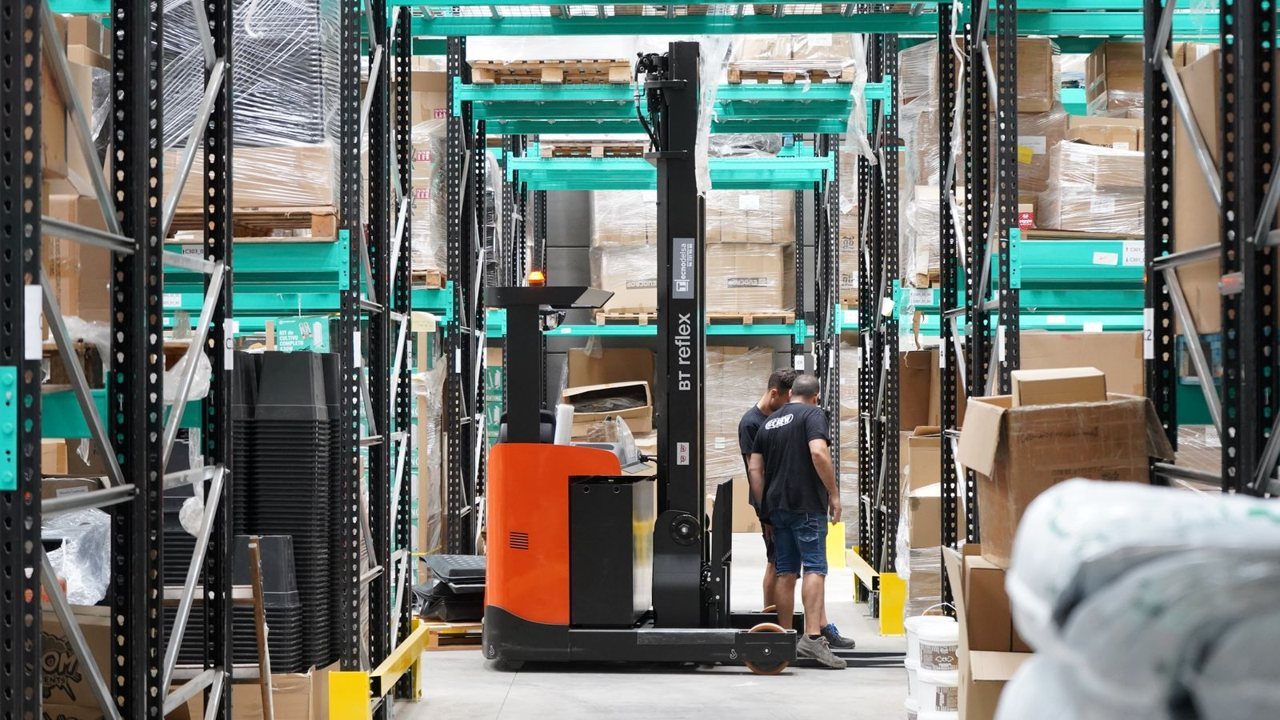
A bonded zone or Foreign-Trade Zone (FTZ) lets you land goods in custody without paying import duty until the moment a unit is withdrawn for sale. In some zones, goods can stay bonded for years. Critically, units that are re-exported never incur the import duty at all. This is not a loophole — it is the standard, lawful deferral mechanism governed by customs in both countries.
The financial logic is powerful for high-value or variable-velocity goods. One mid-sized home-fitness brand profiled by a China sourcing service moved $200,000 of inventory into a Shenzhen bonded zone; because roughly 40% was re-exported to Europe through a duty-free lane, it avoided about $9,000 of import duty it would otherwise have paid and never recovered. Pick-pack-ship from bond also cut order-to-dispatch time from eleven days to four.
Bonded deferral suits you when tariff exposure is material (Section 301 lists, antidumping duties, high HTS rates) and you sell across multiple channels — Amazon, Shopify, and wholesale can all draw from one bonded pool. It is the wrong tool below roughly $50K/month of throughput, where fixed zone fees exceed the duty-float benefit.
Model 3 — Regional Staging with Genuine Transformation
The third model moves part of your production closer to the customer: final assembly or substantial transformation in Vietnam, Mexico, or another near-shore location. The duty advantage only exists if the transformation is real. Merely relabeling a Chinese-made good as "Made in Vietnam" is illegal transshipment — it invites seizure and penalties multiples of the duty owed.
Rules of origin turn on substantial transformation, not a new sticker. Mexico under USMCA can reach 0% only with genuine local content and documented supply chain evidence. Use this model for tariff-exposed SKUs where you can defend the origin claim; keep complex, hard-to-replicate products in China where the ecosystem is unbeatable.
| Model | Duty timing | Best for | Main risk |
|---|---|---|---|
| Bulk → US 3PL / FBA | Paid once at border | Steady, repeatable SKUs; needs domestic speed | Up-front duty + tied-up capital |
| Bonded / FTZ deferral | Deferred until sale; free on re-export | High-value, variable velocity, multi-channel | Compliance overhead; min-volume threshold |
| Regional staging | New origin may lower rate | Tariff-exposed SKUs with real transformation | Illegal transshipment if relabeled only |
Three Moves to Rebuild Your Fulfillment in 30 Days
Action 1: Audit HS Codes With a Licensed Broker
Do not let your freight forwarder guess the classification. Engage a licensed customs broker to review the 10-digit HTS codes for every SKU. Misclassification is the single most common trigger for penalties and the easiest to fix. A correct code is also what makes Model 2 deferral actually work.
Action 2: Rebuild Your Landed-Cost Model From Scratch
Your old spreadsheet assumed $0 duty below $800. Throw it out. Rebuild landed cost per unit including the applicable duty, Section 301 tariffs where they apply, brokerage, and the new per-parcel fees. Only then can you price honestly and decide which model pays back.
Action 3: Consolidate Suppliers Into One Yiwu / Shenzhen Hub
Multiple small parcels from different factories multiply your entry paperwork and duty admin. Consolidating at a Shenzhen or Yiwu warehouse into a single DDP FCL/LCL shipment collapses dozens of entries into one, cuts brokerage, and creates the batch size that makes Models 1 and 2 economical.
The New Enforcement Reality: CBP's AI Is Reading Your Invoice

The old game of under-declaring value to "save" duty is over, and the reason is technical. CBP now runs an AI-driven valuation system that cross-checks four data sets in real time: your declared value, your marketplace listing price, your historical shipment records, and the market price for comparable goods. When the numbers diverge, the system flags the shipment for 100% manual inspection.
A 2026 case at the Port of Norfolk is the cautionary tale: a container declared as 10 sets of cabinets worth $500 was found to hold 781 cartons of cabinets with a true value of $123,554 — a 200x gap. The cargo was seized and a high-penalty process opened. An executive order signed 3 June 2026 ("Strengthening Customs Enforcement") is scheduled for full enforcement on 30 November 2026, giving CBP complete declaration data for end-to-end traceability.
The Most Expensive Mistake: Undervaluing Parcels
Under-declaring does not save money; it borrows against a future catastrophe. Penalties scale from two to five times the underpaid duty in the US, with seizure and Importer-of-Record blacklisting for repeat offenders. In the EU, per-shipment fines run into the thousands of euros and the review threshold is tight. And there is a quieter cost: if goods are lost or damaged, the carrier pays only the declared value. Under-declare to $20 and you have just insured your $500 product for $20.
The de minimis endgame rewards importers who price duty into the model and engineer it out through structure — not those who hide value and hope the algorithm blinks.
A 30-Day Redesign Checklist
- Map every SKU to its correct 10-digit HTS code with a licensed broker.
- Rebuild per-unit landed cost including duty, Section 301, brokerage, and parcel fees.
- Choose a model per SKU: bulk 3PL/FBA, bonded deferral, or genuine regional staging.
- Consolidate multi-factory orders at one Yiwu/Shenzhen hub into DDP shipments.
- Declare the true transaction value on every invoice — never "sample" or "gift" for commercial goods.
- Confirm your Importer of Record and bond are current before the next container sails.
References
- U.S. Congress, Congressional Research Service — China's E-Commerce Exports and U.S. De Minimis Policies (updated 7 Aug 2026).
- U.S. Customs and Border Protection — CBP Modernizes Low-Value Shipment Processing (cbp.gov).
- EU Customs Union reform — elimination of the 150-euro import VAT exemption, effective 1 July 2026.
- Executive Order "Strengthening Customs Enforcement" (signed 3 June 2026; full enforcement 30 Nov 2026).