What are the Yiwu market districts and what do they sell?
- Share
- Issue Time
- Aug 10,2026
Short Answer: Five Districts, Each Grouping a Different Family of Consumer Goods
Yiwu International Trade City is organised into five districts. District 1 covers toys, jewellery and artificial flowers; District 2 bags, hardware and electrical; District 3 stationery, sporting goods and cosmetics; District 4 socks, scarves and textiles; District 5 imported goods, premium home and furniture.
The Five Districts at a Glance
The districts exist so a buyer can compare twenty versions of the same product in a single aisle rather than crossing the city. Knowing which district holds your category is the difference between a productive trip and three days of walking.
| District | What it sells | Why buyers go there |
|---|---|---|
| District 1 | Toys, jewellery, artificial flowers, festival and seasonal decor | Highest booth density; price variance between adjacent booths can reach 300% |
| District 2 | Bags, luggage, hardware, kitchenware, electrical, tools | Strong for functional and hardware-led SKUs |
| District 3 | Stationery, office, sporting goods, cosmetics, eyewear | Packaging-led categories, good for retail-ready goods |
| District 4 | Socks, scarves, gloves, textiles, footwear | The world's largest sock cluster |
| District 5 | Imported goods, brand zone, premium home, bedding, furniture, building materials | Higher price tier and larger items |

Scale: Why the Layout Matters So Much
The Trade City is not a market in the ordinary sense. Walking it without a plan is the single most common mistake first-time buyers make.
How Experienced Buyers Route a Visit
Write the category list before you fly
Group your SKUs by district so each half-day has one destination.
Plan two districts per day, maximum
Three to four days covers the whole catalogue at a workable pace.
Walk one full floor before quoting
Prices between neighbouring booths in District 1 can differ by up to 300%.
Photograph the booth number, not just the product
Booth codes are how you find the seller again the next day.
Collect samples in the afternoon
Mornings are for comparison; carrying bags early slows you down.
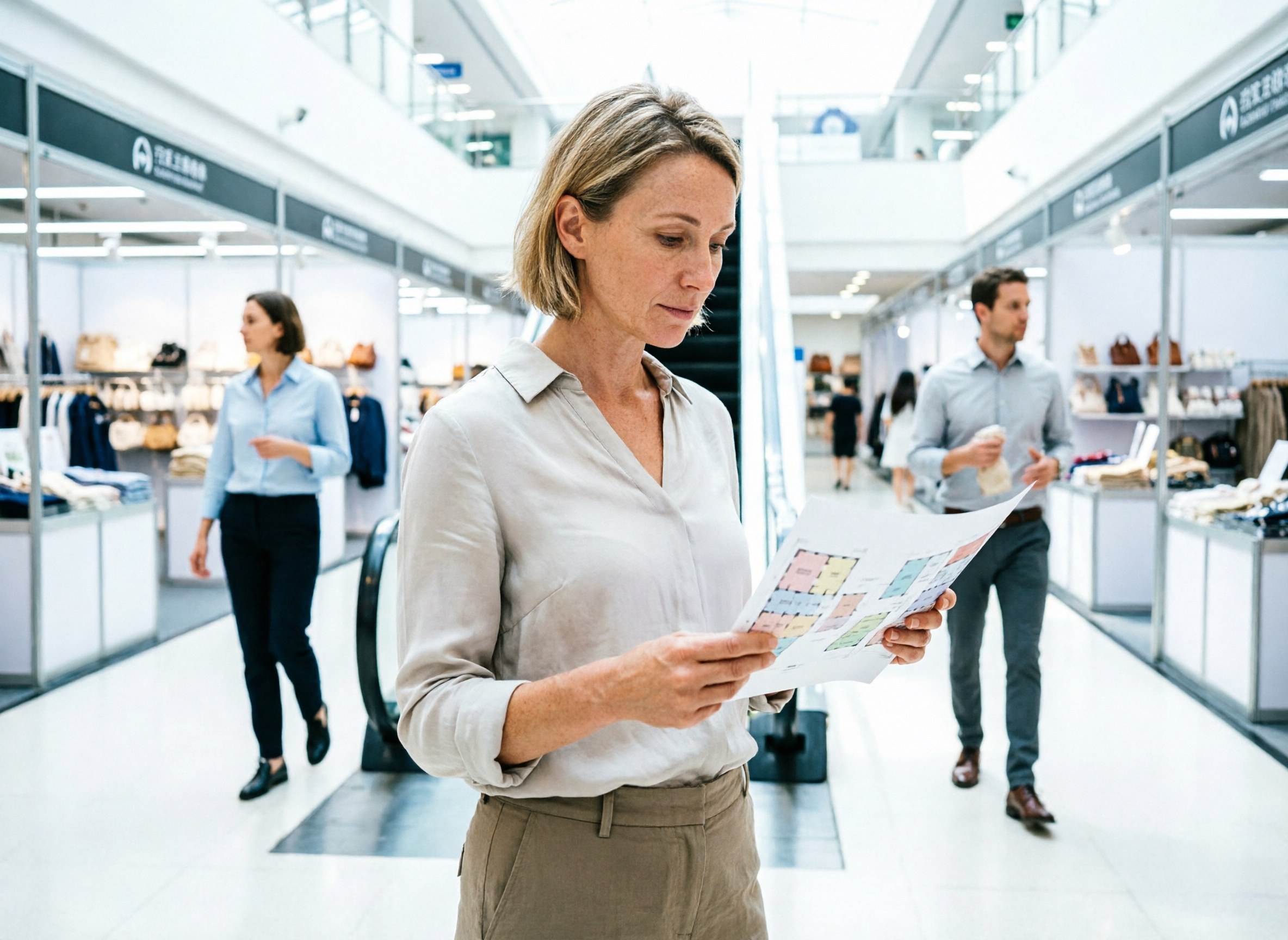
What the District Map Does Not Tell You
The floor plan groups products, not supplier types. Roughly 70% of the booths in the Trade City are trading companies rather than factories, and that distinction is invisible from the aisle.
Case: Two Days Saved by Reading the Map First
The client's list mixed candle holders, cotton throws and desk organisers - three categories sitting in three different districts. Sequenced badly, that is a full day lost to transit. We rebuilt the itinerary as District 5 on morning one, District 4 that afternoon, District 3 on day two, and shortlisted booths in advance.

Beyond the Trade City
- Huangyuan garment market for apparel
- Binwang market for fast-moving small goods
- Specialist streets around the Trade City
- Random roadside wholesalers with no booth code
- Showrooms with no stock on site
- Any 'exclusive agent' who blocks direct booth access
How RND SOURCING Uses the Districts
We are based in Yiwu and walk these districts weekly, so a client's category list becomes a booth-by-booth route with codes and floor numbers before they land. For buyers who do not travel, we run the same route with video calls from the aisle so the client sees the product in the booth in real time. We are not affiliated with any booth or district management, so the shortlist reflects price and quality, not commission from a seller.
Get a district route for your listRelated Questions
- What is the minimum order quantity (MOQ) at Yiwu?
- When is the best time to visit Yiwu market?
- How much does a Yiwu sourcing agent cost per day?