China Sourcing for Beginners: How to Start Your First Import Order
- Share
- publisher
- RND Sourcing Team
- Issue Time
- Aug 4,2026
Summary
A plain-language, seven-step roadmap for first-time importers who want to place a safe, small, and smart initial China sourcing order.

China Sourcing for Beginners: How to Start Your First Import Order
If you are new to importing, the idea of buying from a factory on the other side of the world can feel intimidating. It should not be. China still offers a 30-70% cost advantage over US and European production, with sample turnaround of just 7-14 days and order sizes flexible from 100 to 100,000+ units (VLINK-Zone, 2025). This guide walks you through your first import order in seven clear steps. RND Sourcing, a Yiwu agent with 20+ years of experience, built this process to keep beginners safe and small at first. Start by reading our About Us page to see how we work.
You CAN Source From China as a Beginner
Many first-time buyers assume sourcing is only for large companies with staff in Asia. That is no longer true. Online platforms list 200,000+ verified suppliers (Alibaba), trade shows like the Canton Fair host 26,000+ exhibitors twice a year, and local agents handle the rest. The real risk is not being a beginner, it is skipping the basic safeguards below.
Mindset first
You do not need to be an expert. You need a clear product brief, a small first order, and independent verification. The rest can be managed with the right partner.
Step 1: Validate Your Product Idea
Before contacting any supplier, confirm there is demand and a workable margin. Check marketplace listings, read competitor reviews, and estimate your landed cost (product plus freight, duties, and fees). A one-page brief with dimensions, material, function, target price, and target market makes suppliers take you seriously.
- Define the product clearly (size, material, function, packaging).
- Research competitor pricing on Amazon, Shopify, or retail.
- Estimate landed cost, not just the factory price.
Step 2: Set Your Budget and Timeline
Decide how much you can risk on a first order and when you need stock. New buyers should start with a small, testable batch rather than a container. Build in a realistic timeline: samples take 1-2 weeks, production 30-60 days, and ocean freight 20-40 days. Plan 3-6 months ahead of any sales season to avoid rush fees.
| Stage | Typical time | Cost note |
|---|---|---|
| Samples | 7-14 days | USD 50-200 to save thousands |
| Production | 30-60 days | 30% deposit standard |
| Sea freight | 20-40 days | Cheapest per unit |
| Inspection | 1 day | USD 250-400 AQL 2.5 |
Step 3: Find Suppliers (and Why an Agent Helps)
You can search Alibaba, Made-in-China, or Global Sources, but anyone can create a listing, and a gold badge is not a guarantee. A local sourcing agent adds on-the-ground verification: pre-vetted factory databases, language support, and background checks. RND's vetted network means you start with suppliers that have already passed screening, not cold leads that might be trading companies or scams.
Shortlist platforms
Use Alibaba or Global Sources with 'Verified Supplier' and 'Trade Assurance' filters.
Use an agent
Let a local agent run factory audits and reference checks.
Compare quotes
Get 2-3 written quotes with the same specification.
Step 4: Request Samples and Evaluate Quality
Never skip samples. Order from two or three shortlisted suppliers and test thoroughly: appearance, function, packaging, and even smell for plastics. Compare them side by side. Keep in mind that some suppliers send great samples but ship lower-grade goods later, which is why a pre-shipment inspection remains essential. Learn more on our products page about categories we routinely sample.
- Product appearance and finish.
- Functionality under real use.
- Packaging quality and labelling accuracy.
- Consistency across multiple sample units.

Step 5: Place Your First Order — Small and Smart
When you approve a sample, place a small first order to test the factory's real production, not just its sample bench. Use a formal purchase order that confirms every spec in writing, agree on inspection criteria, and use standard payment terms: 30% deposit, 70% after inspection. Avoid paying 100% upfront, which removes your leverage entirely.
Payment safety
Standard terms are 30% deposit and 70% after an independent inspection passes. Never release the balance before verification. Ask us how we structure safe payments.
Step 6: Arrange Shipping
Choose the method by budget and urgency. Express couriers (DHL, FedEx) suit samples in 3-7 days; air freight is fast but costly; sea freight is cheapest for full shipments at 20-40 days. Your agent or freight forwarder handles booking, export documents, and customs paperwork. Always calculate the full landed cost, including duties, before committing.
| Method | Transit | Best for |
|---|---|---|
| Express | 3-7 days | Samples, urgent |
| Air freight | 5-10 days | High-value, small |
| Sea LCL | 25-45 days | Small-medium |
| Sea FCL | 20-40 days | Large volume |
Step 7: Receive, Inspect, and Sell
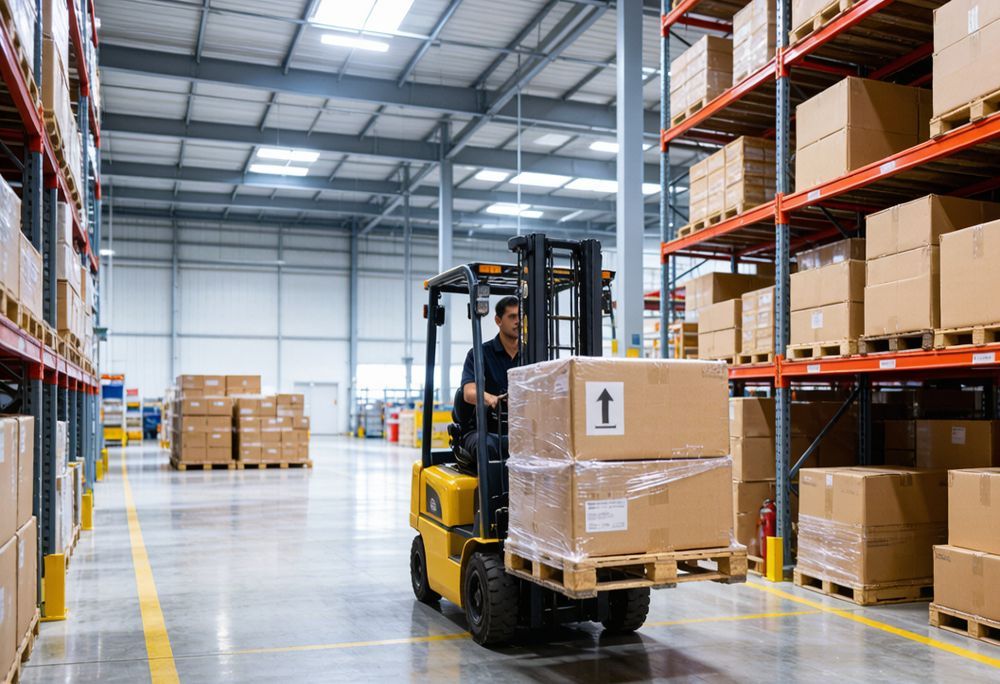
On arrival, confirm the count and condition, then reconcile against the inspection report. If you used a pre-shipment inspection, most quality issues were already caught in China, where rework is the factory's cost. Now list, market, and sell, while collecting customer feedback to refine the next order's specification.
Common Beginner Mistakes
Most costly errors are avoidable. The biggest are skipping samples, paying 100% upfront, ignoring import duties, and single-sourcing without a backup. Underestimating lead times is another classic, often causing missed sales seasons. A transparent agent helps you sidestep all of these.
- Skipping inspection to save a few hundred dollars.
- Paying everything before production starts.
- Forgetting duties and freight in the landed cost.
- Relying on a single unverified supplier.
Conclusion
Your first China import order does not need to be large or risky. Validate the idea, sample from multiple suppliers, keep the first batch small, and verify before you pay. With the right process, beginners routinely build profitable import businesses. When you are ready, send us your product brief and we will shortlist vetted factories within days.
Do I need a company to import from China as a beginner?
In most countries you can start as a sole proprietor, but you will need a tax or import number for customs. Check your local rules before the first shipment.
How much money should my first order be?
Keep it small and testable, often a few hundred to a few thousand dollars, enough to validate quality and demand without major risk.
Is a sourcing agent worth it for a small first order?
Yes. An agent's vetted network and inspection oversight typically save more than their flat fee by avoiding bad suppliers and defective goods.
What payment terms are safe for beginners?
The standard is 30% deposit and 70% after an independent inspection passes. Avoid any supplier demanding 100% upfront.
Sourcing from China as a beginner is easier and safer than it looks when you follow the steps. Contact RND Sourcing and let our Yiwu team guide your first order from sample to shelf.
Work With RND Sourcing
RND Sourcing is your on-the-ground sourcing team in Yiwu, helping global buyers find reliable factories, negotiate better terms, and ship with confidence. For a free, no-obligation consultation, visit yourchinagent.com.