How to Source Toys and Games from China: Compliance, Safety, and Trends
- Share
- publisher
- RND Sourcing Team
- Issue Time
- Jul 27,2026
Summary
A 2026 guide to sourcing toys and games from China, covering safety standards, factory selection, quality control, and a seasonal calendar.
How to Source Toys and Games from China: Compliance, Safety, and Trends
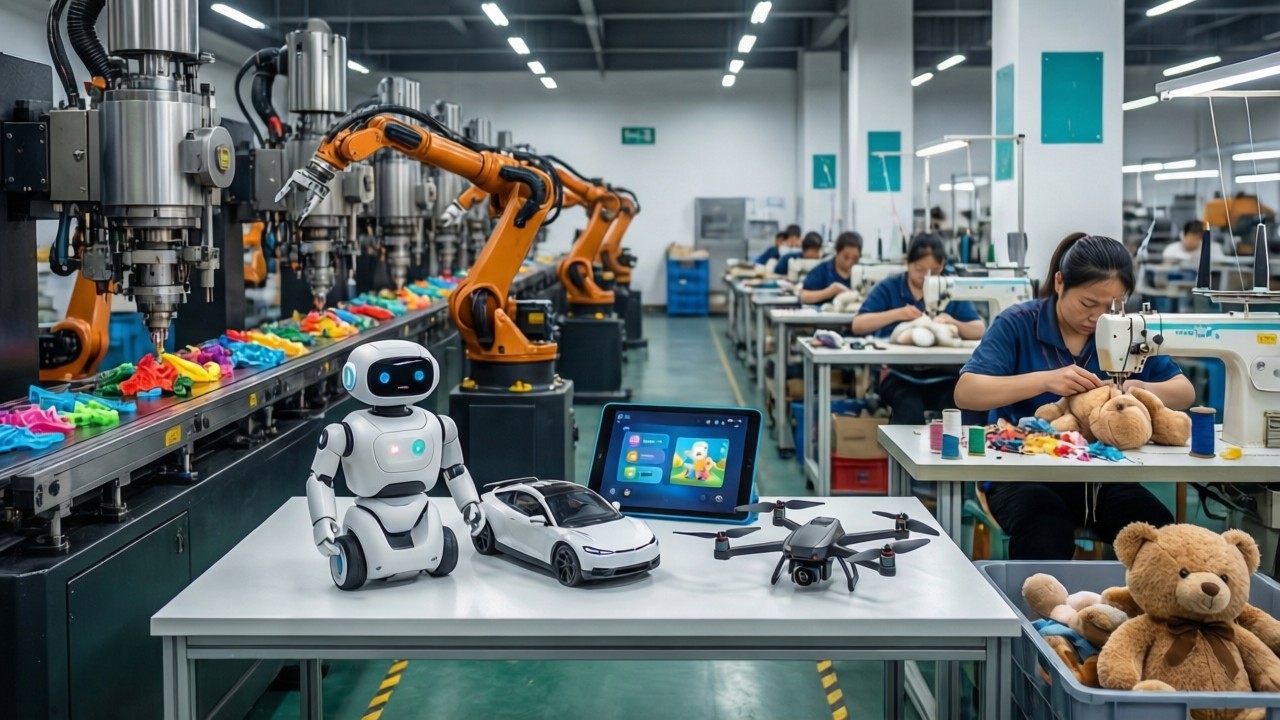
China is the world's largest toy producer and exporter, supplying the bulk of global toy volume across plastic, plush, wooden, and electronic categories. Sourcing here gives unmatched variety and speed, but success depends on compliance and quality control, not just price. As a 20-year Yiwu sourcing agent, RND Sourcing helps importers navigate the 2025-2026 safety updates that now shape every shipment.
Why China Dominates Toy Manufacturing
Decades of cluster development give China dense supply chains: Yiwu for general merchandise, Chenghai (Shantou) for plastic and electronic toys, Yunhe for wooden toys, and Yangzhou for plush. This geography means short lead times, easy component access, and competitive tooling. The trade-off is that standards vary by factory, so verification is essential.
- Mature clusters with deep component supply.
- Fast sampling and flexible MOQs for many categories.
- Strong OEM/ODM capability for custom designs.
- One-stop access via Yiwu's market for mixed orders.
Popular Toy Categories and Market Trends
In 2026 the strongest trends are STEM and educational kits, eco-friendly and wooden toys, collectible mini-figures, and tech toys with sound or app connectivity. Parental demand for 'screen-free' learning and sustainable materials is pushing suppliers toward certified plastics, FSC wood, and recyclable packaging.
Trend to watch
Toys with rechargeable batteries and 'realistic food' designs now face tighter 2026 rules. Build compliance into the design brief early, not after tooling.
Safety Regulations: EN71, ASTM F963, CPSC
Three frameworks define most markets. The EU uses EN71 (mechanical, flammability, migration of elements; EN71-3 covers 19 migratable elements with lead at 13.5 mg/kg). The US requires ASTM F963-23 (effective April 2024, with 2026 additions for rechargeable lithium batteries) plus CPSIA chemical limits and a CPC certificate from a CPSC-accepted lab. China's GB 6675-2025 was published October 5, 2025 and takes effect November 1, 2026.
| Standard | Market | Key 2025-2026 update |
|---|---|---|
| EN71-1:2026 | EU | Tighter cord length, ride-on and realistic-food toy rules |
| ASTM F963-23 | US | Rechargeable lithium battery safety added in 2026 |
| CPSIA / CPC | US | Lead base <=100ppm, coating <=90ppm, 8P phthalates <=0.1% |
| GB 6675-2025 | China | Effective Nov 1 2026; adds formaldehyde, PAH, VOC limits |
Finding the Right Toy Factory
Shortlist factories by category cluster and audit their certifications, then verify with a sample and a third-party test. Prefer suppliers that already export to your target market and can show valid EN71, ASTM F963, or CPC documentation. A vetted network matters: RND qualifies factories on capability, compliance history, and social accountability before introduction.
Define category and market
Pick the cluster (e.g. Chenghai for plastic) and the target standard (EN71 or ASTM).
Audit and sample
Request certificates and a pre-production sample for your own lab test.
Verify compliance docs
Confirm CPC/EN71 reports cover the exact SKU, materials, and colors.
Negotiate and lock specs
Fix materials, warnings, and age grading in the contract.
Quality Control for Toys
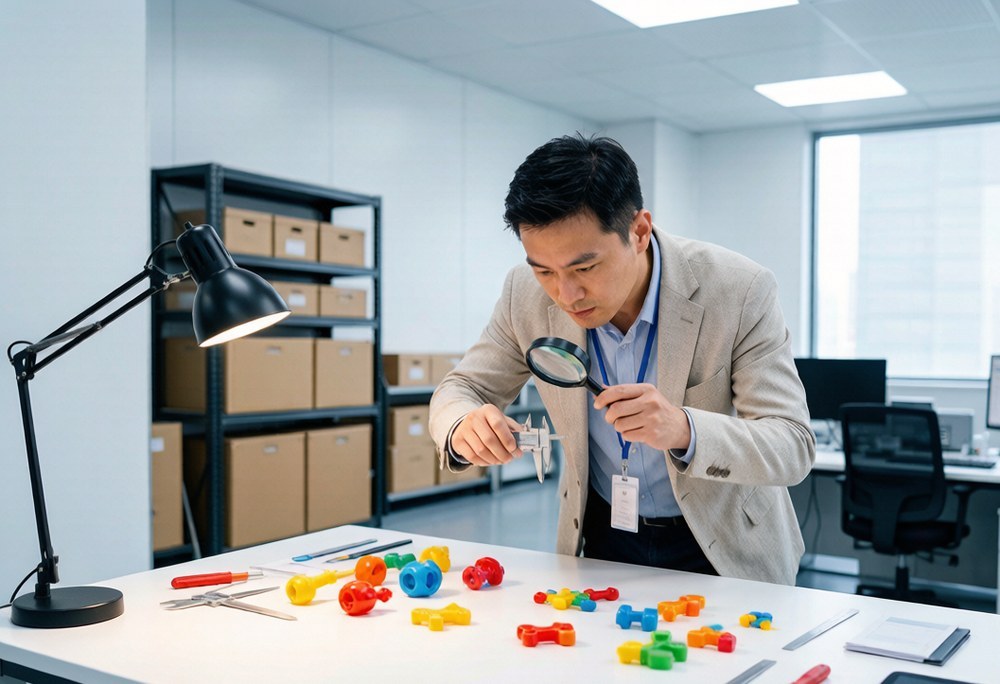
Toy QC centers on physical and chemical risk. Check small parts (zero tolerance for under-3s), sharp edges, cord length (<=22 cm), projectile energy (<=0.08 J), acoustic output (<=85 dB for sound toys), and magnet strength (flux index <50). Chemically, verify lead, cadmium, and phthalates, plus formaldehyde and azo dyes on textiles. RND runs independent inspection against these points before shipment.
- Pre-production check on materials and tooling.
- During-production inspection for critical defects.
- Final random inspection (AQL) with functional and safety tests.
- Laboratory testing at a CPSC-accepted or EU-notified body.
Packaging and Labeling Compliance
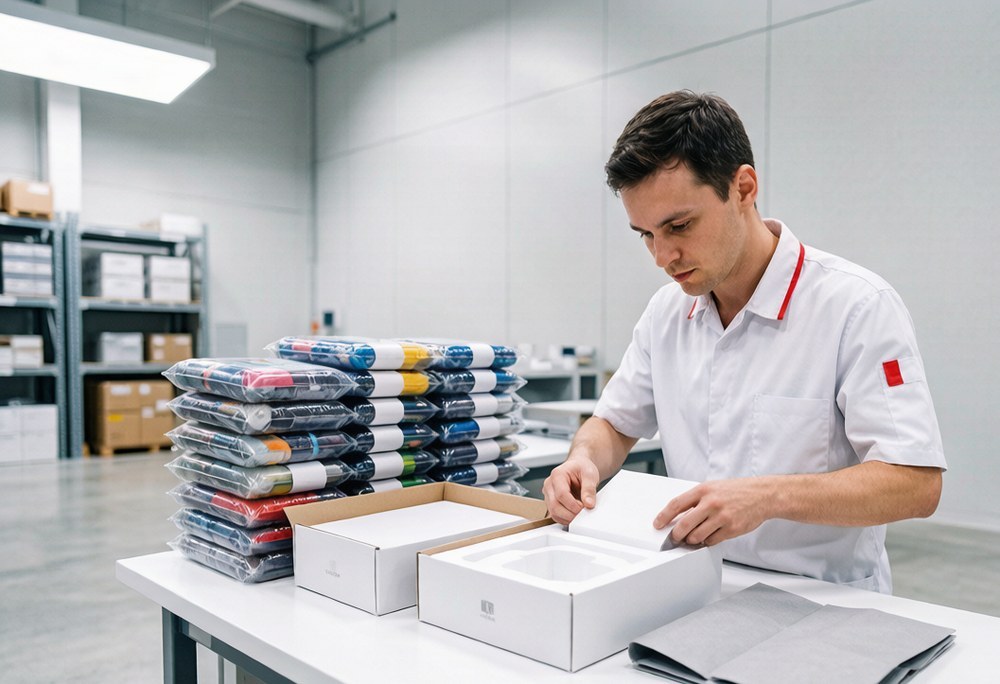
Packaging must carry the correct age grading, choking-hazard warnings, and traceability codes, plus the right marks (CE for EU, CPC/prop 65 where relevant for US). For US sales, Amazon requires the CPC uploaded before listing. Water beads gained a specific US safety standard from March 12, 2026, so confirm the latest rule for novel items.
Label checklist
Print age grading, choking warning, and a batch/lot trace code on every carton and inner pack. RND can add compliant labeling at our warehouse.
Seasonal Sourcing Calendar for Toy Sellers
Toy lead times collide with peak retail. Place orders early: Q1 for summer and back-to-school, and by May-June for the Q4 holiday peak, allowing for production, testing, and ocean transit of 25-45 days plus customs. Electronics and battery toys need extra time for certification.
| Sell period | Order by | Notes |
|---|---|---|
| Back-to-school | Q1 | Educational and stationery toys |
| Holiday Q4 | May-June | Longest ocean transit plus peak surcharges |
| Year-round | Rolling | Keep buffer stock via China 3PL |
Case Study: RND's Toy Sourcing Success
A US brand wanted a wooden puzzle line for under-3s. RND sourced from Yunhe, specified FSC wood and water-based paint, ran ASTM F963 and CPSIA testing, and applied choking-warning labels at our warehouse. The line cleared CBP and Amazon review on first submission, with zero compliance holds and a defect rate under 1%.
Conclusion
Sourcing toys from China rewards those who lead with compliance and verification. Know your standard, vet the factory, test the sample, and label correctly. For a vetted toy factory introduction and inspection, reach our team on the contact page.
What toy safety standard does the US require?
The US requires ASTM F963-23 plus CPSIA chemical limits and a Children's Product Certificate (CPC) from a CPSC-accepted lab; lead is capped at 100ppm base and 90ppm coating.
What is EN71 and where does it apply?
EN71 is the EU toy safety standard covering mechanical, flammability, and chemical migration (EN71-3 lists 19 migratable elements); CE marking is required for the EU market.
When does China's GB 6675-2025 take effect?
GB 6675-2025 was published on October 5, 2025 and becomes mandatory on November 1, 2026, adding limits for formaldehyde, PAH, and VOCs.
How early should I order toys for the holidays?
Place Q4 holiday orders by May-June to allow production, testing, and 25-45 day ocean transit plus customs and peak surcharges.
Do battery toys need extra testing in 2026?
Yes. ASTM F963 added rechargeable lithium battery safety requirements in 2026, and sound toys must meet acoustic limits around 85 dB.
Want a compliant toy line sourced and inspected in China? Send us your product brief and we will qualify the factory and test the samples.
Work With RND Sourcing
RND Sourcing is your on-the-ground sourcing team in Yiwu, helping global buyers find reliable factories, negotiate better terms, and ship with confidence. For a free, no-obligation consultation, visit yourchinagent.com.