How to Source Walking Sticks and Canes from China: Quality and Compliance
- Share
- publisher
- RND Sourcing Team
- Issue Time
- Sep 19,2026
Summary
A buyer's guide to sourcing walking sticks and canes from China, covering materials, quality checks, medical-device rules, and customization.
How to Source Walking Sticks and Canes from China: Quality and Compliance
Walking sticks and canes are a steady, aging-population-driven category with real quality and compliance stakes. The global canes and walking sticks market was valued at about USD 9.94 billion in 2025 and is projected to reach USD 10.61 billion in 2026, growing at a 6.75% CAGR through 2035 (Global Growth Insights, 2026). China is a major production base, but sourcing safely means understanding materials, load limits, and medical-device rules. Our team has vetted cane factories for over 20 years.
The Walking Aids Market
Demand is anchored by aging populations in North America, Europe, and increasingly Asia-Pacific. North America held about 34.8% of the walking canes and crutches market in 2025, with Asia-Pacific the fastest-growing region (PMarketResearch, 2025). More than 60% of users prefer lightweight mobility aids, and over 55% seek adjustable products, so sourcing decisions should prioritize weight and adjustability alongside price.
Types of Walking Sticks: Cane, Trekking, Medical
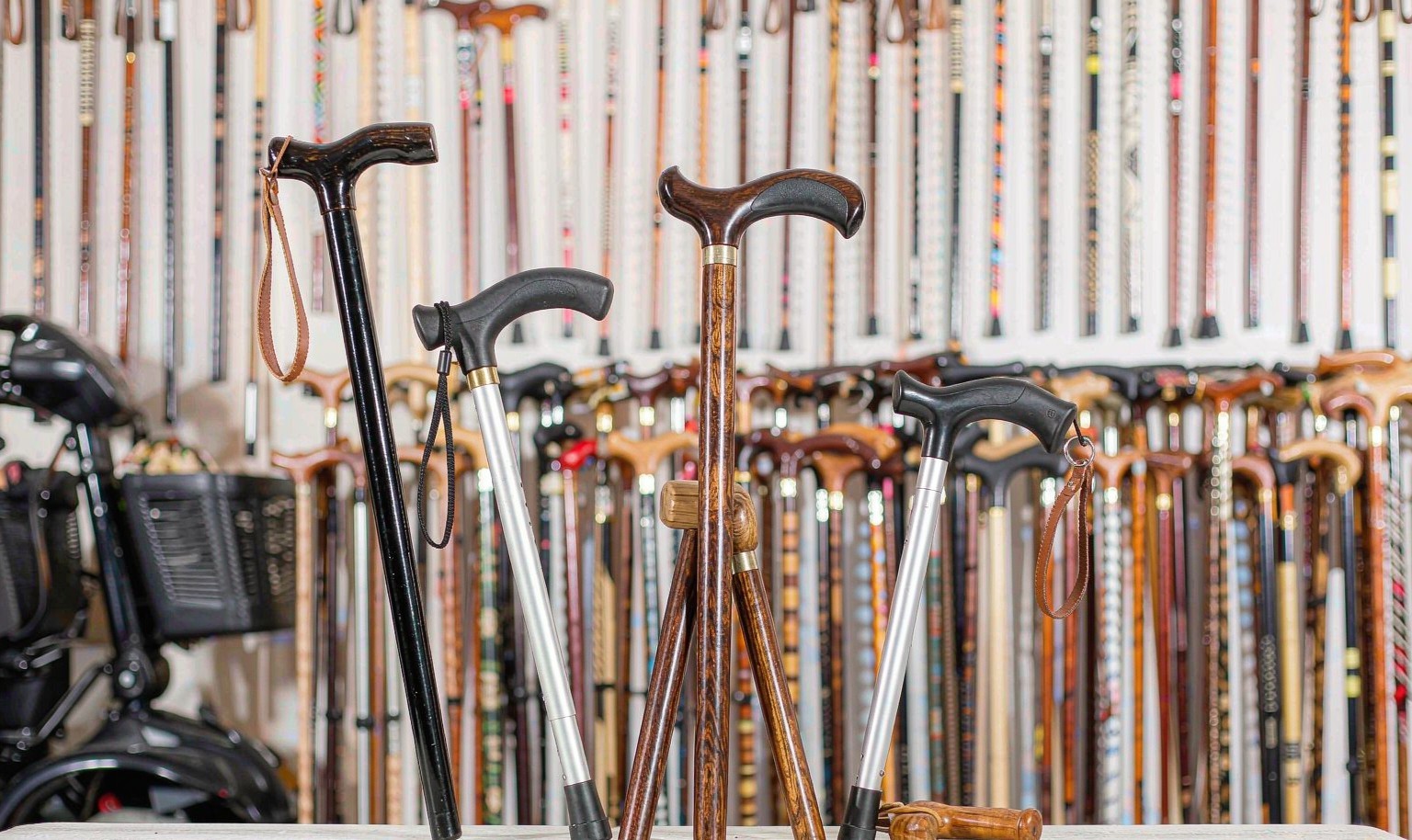
The category splits into three main uses. Everyday canes offer light support and often double as fashion accessories. Trekking poles serve hikers and need shock absorption and adjustable length. Medical or mobility canes (including quad and folding designs) support users with balance or strength issues and may qualify as medical devices. Matching the type to your market determines which standards apply.
- Everyday canes: style-led, often wooden or patterned, light support.
- Trekking poles: adjustable, shock-absorbing, for outdoor use.
- Medical canes: quad, folding, or offset designs for mobility support.
Materials: Wood, Aluminum, Carbon Fiber
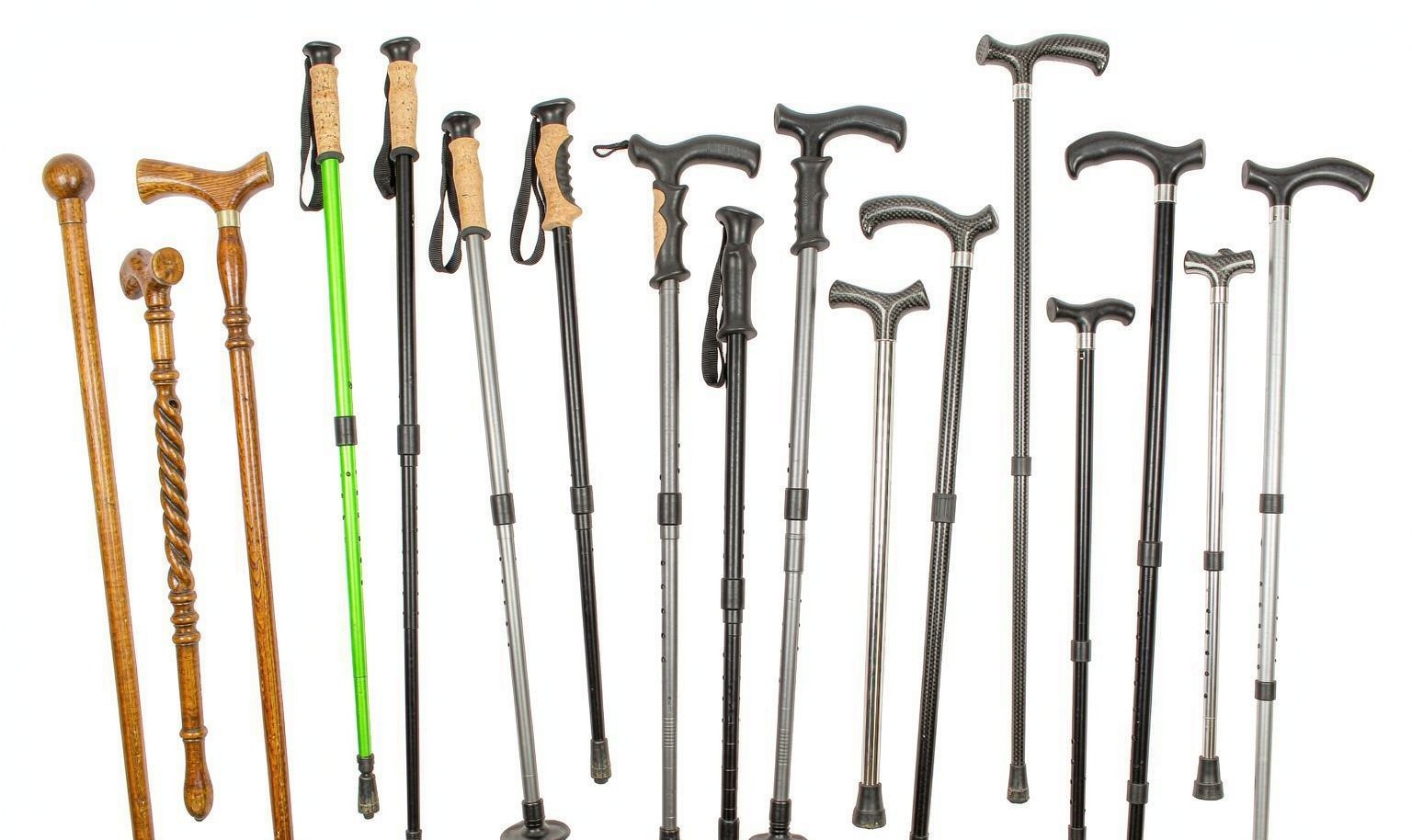
Material choice sets the price, weight, and positioning. Aluminum led the 2025 market at about 39.8% share thanks to its light weight and corrosion resistance, wood held about 29.9% for its familiar look and low cost, and carbon fiber reached about 21.1% for premium strength-to-weight performance (PMarketResearch, 2025). Each material needs its own inspection criteria for joints, finish, and durability.
| Material | Share 2025 | Best for |
|---|---|---|
| Aluminum | 39.8% | Lightweight, durable, everyday |
| Wood | 29.9% | Classic look, low cost |
| Carbon fiber | 21.1% | Premium, ultra-light, strong |
Key Quality Indicators: Weight Capacity, Grip, Tip
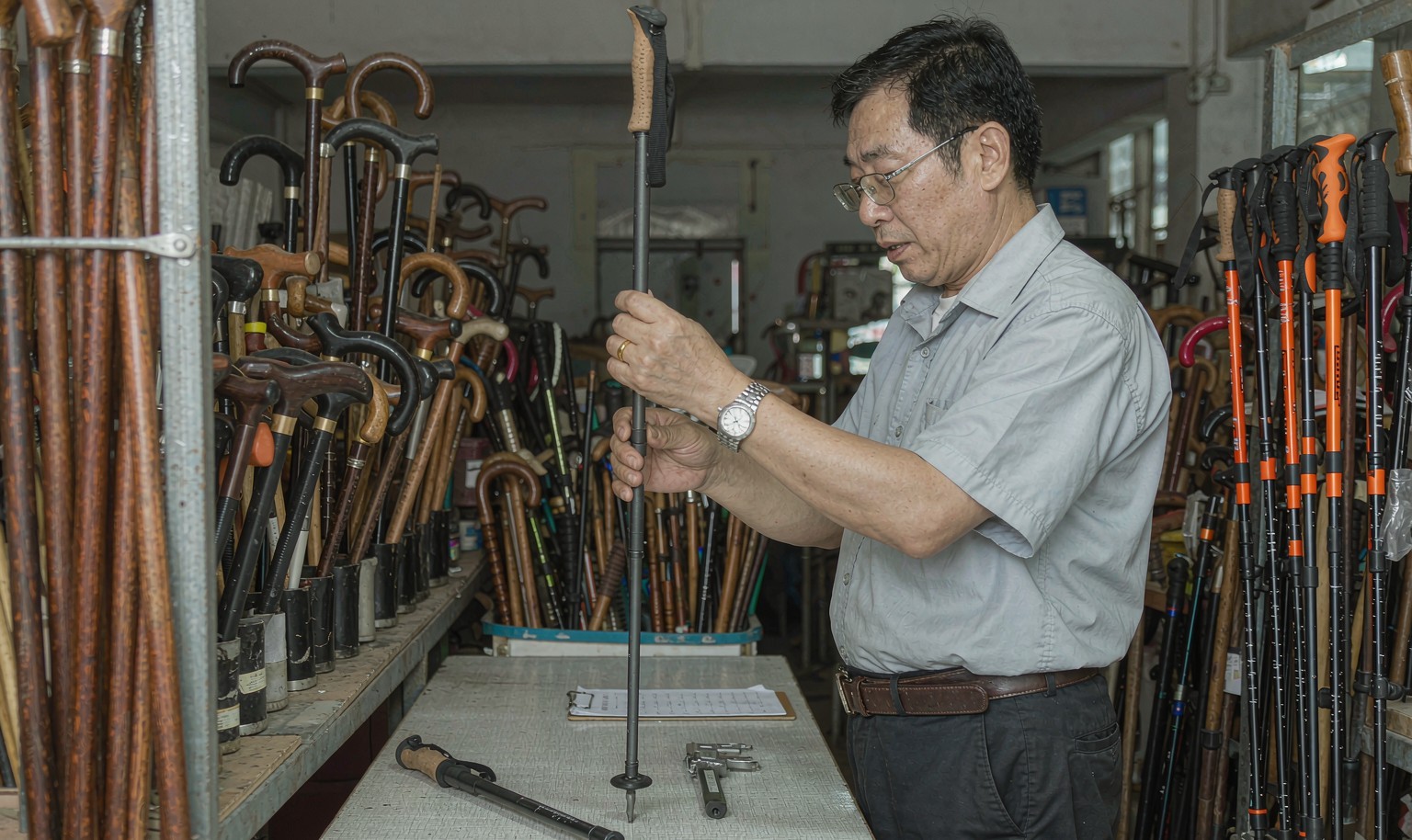
Three indicators decide whether a cane is safe and sellable. Weight capacity (commonly 100 to 150 kg) must be rated and tested. The grip should sit comfortably and resist slipping, with ergonomic handles a growing preference. The tip needs a non-slip rubber base, and many buyers now expect anti-slip and shock-absorbing features. Over 35% of users specifically look for advanced safety tips (Global Growth Insights, 2026).
Inspect these
Verify rated load capacity with test reports, check handle comfort and joint security, and confirm the tip is replaceable and non-slip before approving bulk production.
Medical Device Regulations for Walking Aids
In the United States, walking canes are generally classified as Class I devices and are exempt from 510(k) premarket notification, which lowers the barrier to entry (FDA guidance, 2023). In the EU, such products fall under the Medical Device Regulation (MDR 2017/745), requiring a Technical File, CE marking, and a Responsible Person. Medicare covers many canes under HCPCS codes E0100 and E0110-E0118. Know your target market's rules before tooling up.
- USA: FDA Class I, 510(k) exempt, but labeling and claims must be accurate.
- EU: MDR 2017/745, CE marking, Technical File, and a Responsible Person required.
- Claims: avoid implying medical treatment beyond the device's actual function.
Finding Specialized Manufacturers
Cane manufacturing clusters exist across China, but specialization varies: some excel at wooden fashion canes, others at aluminum or carbon-fiber medical models. The risk is booking a general workshop that has never passed an export audit. RND screens factories for relevant experience, valid licenses, and export history, then verifies with an on-site audit so you are not the factory's first overseas experiment.
Define type and market
Lock the cane type and the regulation it must meet.
Shortlist specialists
Find factories with proven export experience in that type.
Audit and sample
Verify license, capacity, and a physical golden sample.
Validate compliance
Confirm test reports and labeling for the destination market.
Custom Options: Colors, Patterns, Ergonomic Designs
Differentiation is easy in this category. Wooden canes accept carved patterns, laser engraving, and colored finishes; aluminum and carbon models offer anodized colors and printed grips; ergonomic handles can be molded to specific hand shapes. Almost 40% of consumers now prefer personalized mobility solutions (Global Growth Insights, 2026), so custom design is a genuine margin lever, not a gimmick.
Customization tip
Start with a proven base model and layer on color, grip, and tip options. This keeps tooling costs low while giving you a distinct SKU range. Send us your design to start.
RND's Walking Cane Sourcing Expertise
RND Sourcing brings 20+ years of on-the-ground experience in Yiwu and China's mobility-aid clusters, with a vetted network of cane specialists. We match the right factory to your type and market, run independent inspections on weight capacity and finish, and confirm regulatory documentation before shipping. Our fixed-fee model means no supplier kickbacks, so our only goal is a safe, compliant, sellable product. See our product categories.
Compliance first
We treat load-rating tests and market-specific documentation as non-negotiable, protecting you from recalls and customs rejections.
Conclusion
Sourcing walking sticks and canes from China can be profitable and safe when you respect materials, quality indicators, and medical-device rules. The right factory and a disciplined inspection process turn a sensitive product into a reliable seller. When you are ready, send us your product idea and our team will build a compliant sourcing plan.
Are walking canes regulated as medical devices?
In the US they are generally FDA Class I and exempt from 510(k). In the EU they fall under MDR 2017/745 and require CE marking and a Responsible Person.
Which cane material is most popular?
Aluminum led the 2025 market with about 39.8% share for its light weight and durability, followed by wood at 29.9% and carbon fiber at 21.1%.
What quality checks matter most for canes?
Rated weight capacity with test reports, secure and comfortable grip, joint integrity, and a non-slip replaceable tip are the key safety checks.
Can walking canes be customized?
Yes. Color finishes, laser engraving, patterned wood, anodized metal, and ergonomic handle molding are common and increasingly expected by buyers.
How does RND ensure cane compliance?
RND audits factories, validates market-specific test reports and labeling, and inspects load capacity and finish before shipment, with no supplier commissions.
Walking aids reward careful sourcing over fast, cheap deals. Reach our team to match your cane design with a compliant Chinese manufacturer.
Work With RND Sourcing
RND Sourcing is your on-the-ground sourcing team in Yiwu, helping global buyers find reliable factories, negotiate better terms, and ship with confidence. For a free, no-obligation consultation, visit yourchinagent.com.